
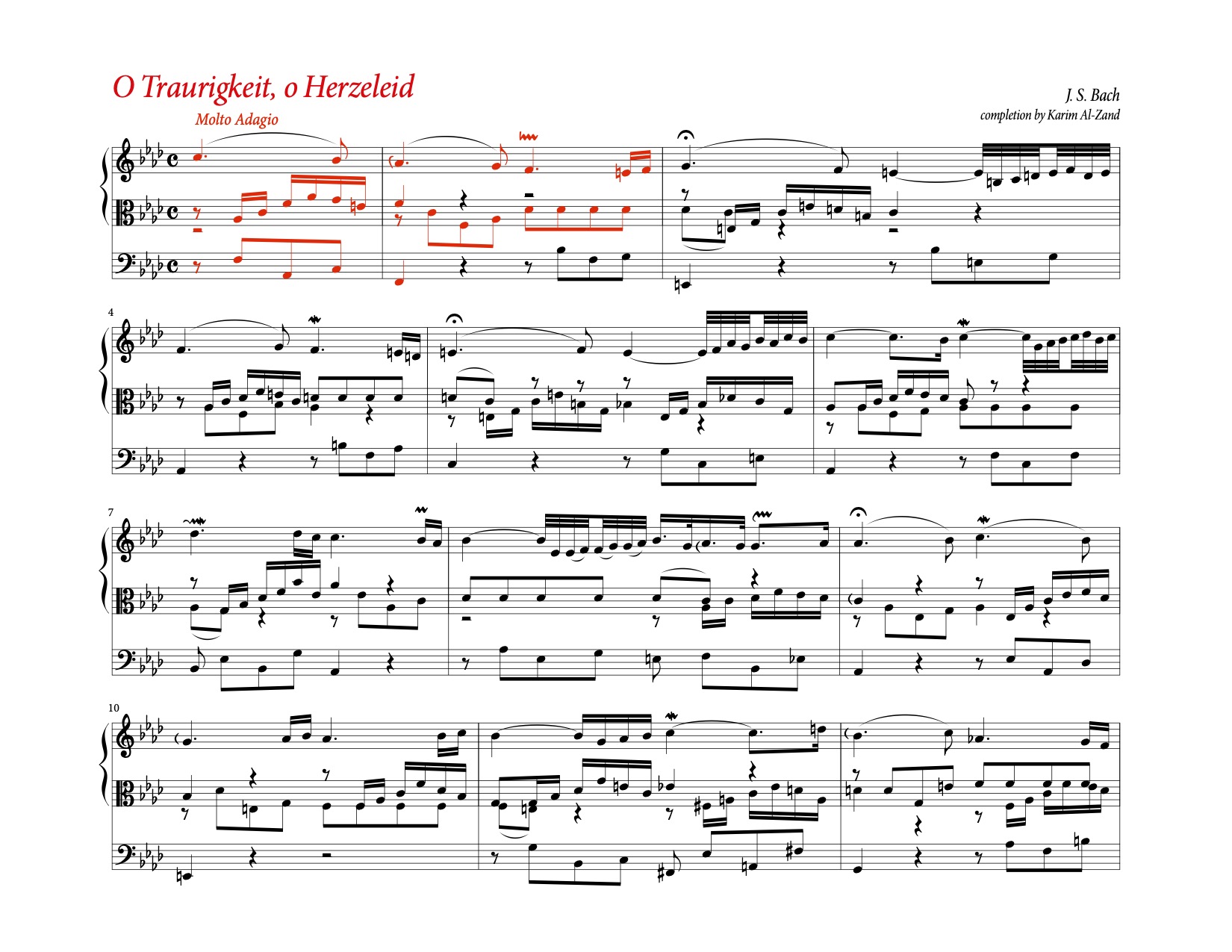
Completion of Bach’s O Traurigkeit, o Herzeleid
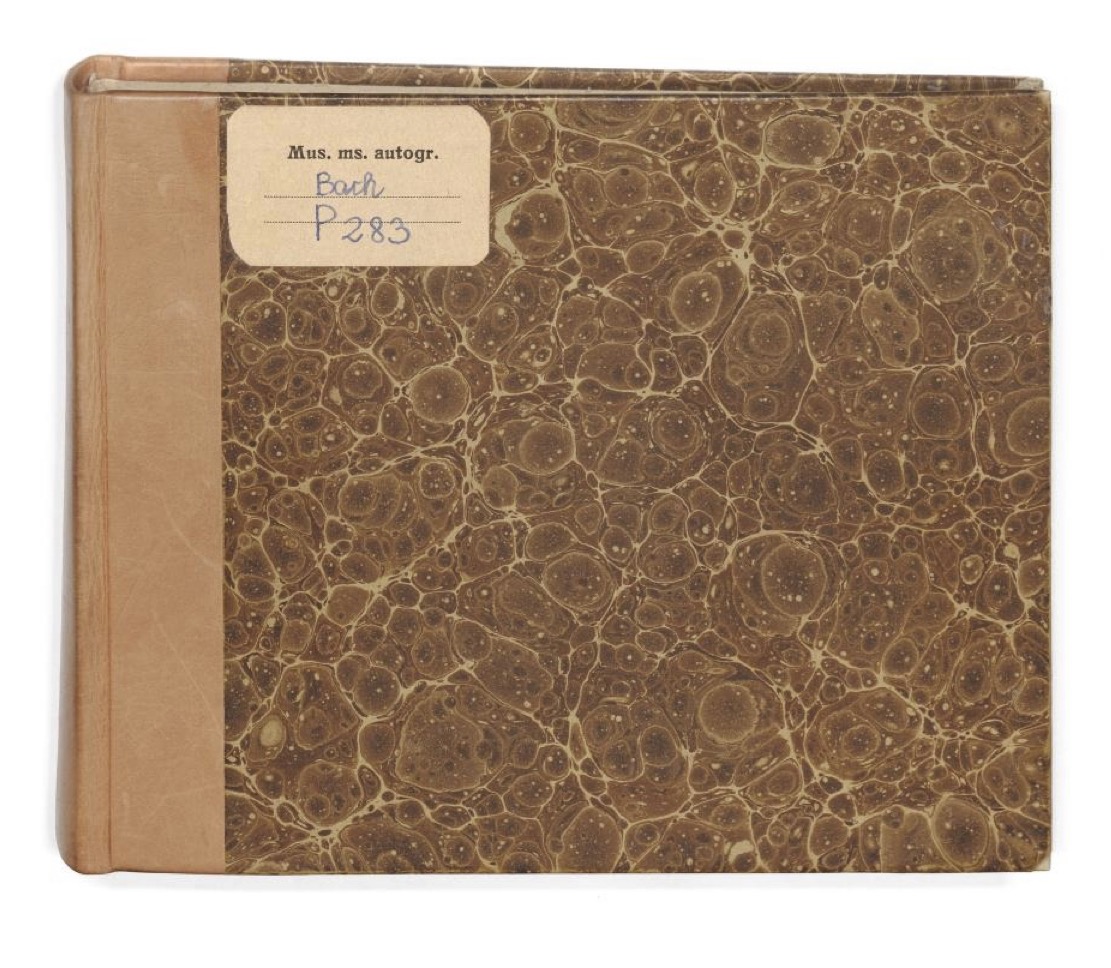
J.S. Bach’s Orgelbüchlein [Little Organ Book] is a compendium of organ chorale preludes organized by liturgical calendar. The 46 pieces in the collection were written largely during Bach’s time as the organist at the Ducal court in Weimar (1708-1717). One unique aspect of the manuscript is that Bach labelled all the pages of the book with chorale titles in advance, before writing the preludes themselves. As evidenced by the many blank pages, Bach seems to have envisioned a set of 164 preludes, filling out the entirety of the book, but in the end only a third of that number were written.
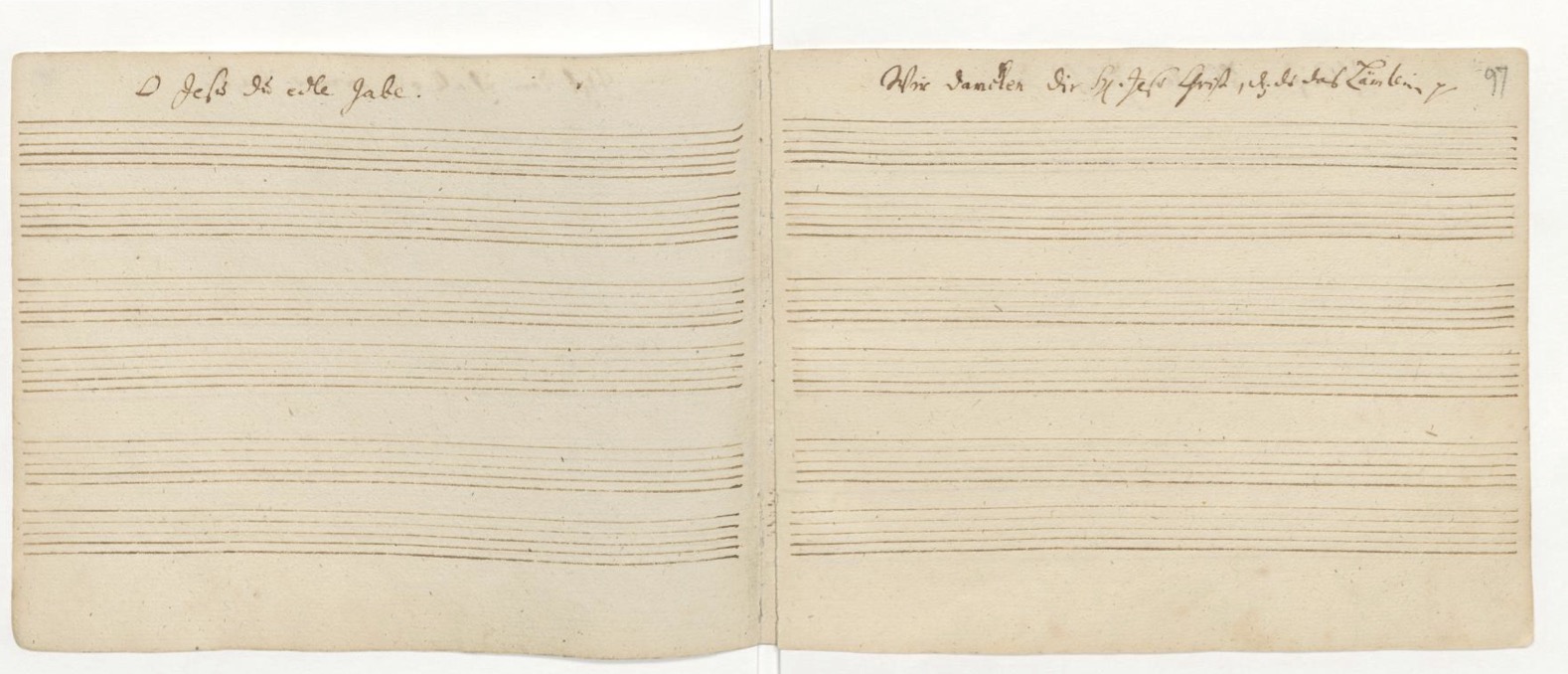
On one page however, corresponding to the passion chorale O Traurigkeit, o Herzeleid, Bach included a tantalizing one-and-a-half measure incipit:
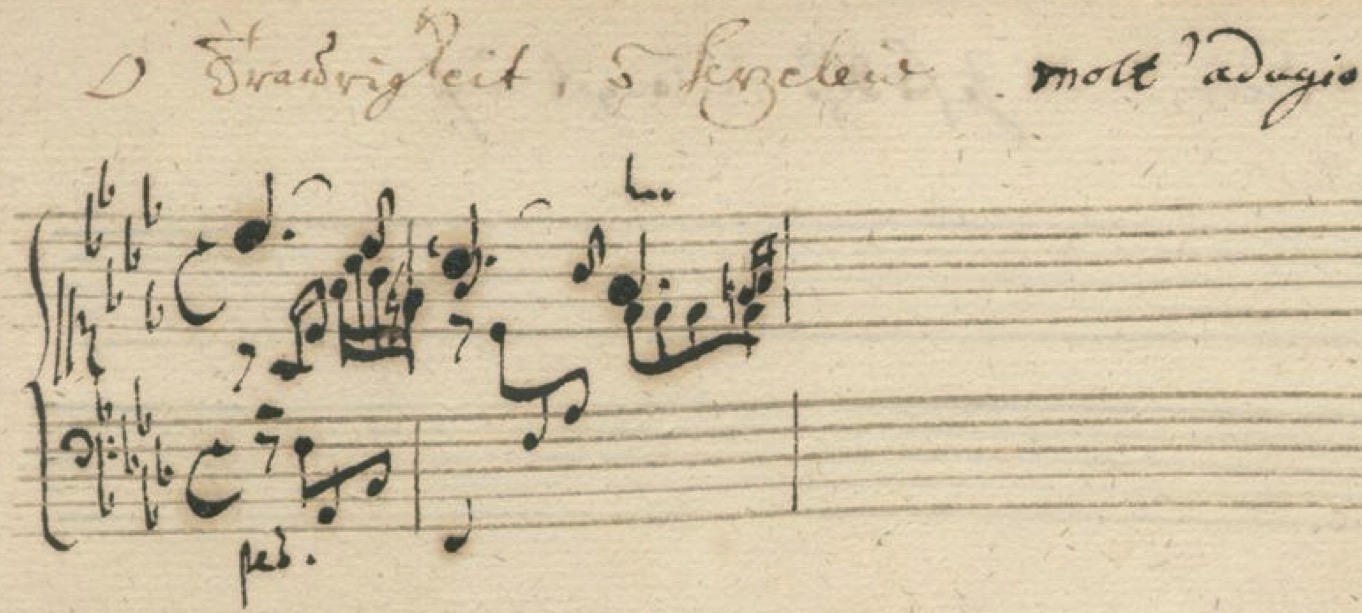
The completion attempted here uses this incipit, in combination with Bach’s other extant preludes as models. The setting is predicated on several principles that seem to be operative in the Orgelbüchlein:
1. Each prelude is modest in scope, length and material. Bach seems to have been particularly concerned to keep each setting to a singe page, despite the fact that his manuscript book is exceedingly small (ca. 8”x7”). He goes to great lengths to accomplish this: writing notes names for the pedal part to avoid an extra staff; resorting to a compact tablature notation; or using “paste-ins” and facing pages to insert extra measures. (Besides the pragmatic performance considerations, the single-page limit may stem from Bach not wanting to intrude on subsequent pages, since they were already “reserved” for other preludes.)
2. Most of chorale preludes of the Orgelbüchlein fall fairly distinctly into three basic types:
a) preludes using contrapuntal artifice (canons of various sorts) in which the chorale tune is heard quite plainly;
b) preludes in which the chorale melody is floridly embellished, typically at a slow tempo; and
c) “pattern” preludes, such as described in 3. below, in which a consistent rhythmic-motivic texture is maintained from beginning to end, again with the chorale appearing fairly plainly in one voice.
3. The preludes use extreme economy in their motivic material. In most cases, each piece uses one or two distinct musical ideas, either derived from the chorale melody or inspired by its textual meaning. And each of those ideas is used in a consistent, well-defined textural/metric/rhythmic pattern or design. Thus, in many cases, the basic “blueprint” of a prelude is revealed within its first few phrases. This is most clearly exemplified in the chorale Alle Menschen müssen sterben.
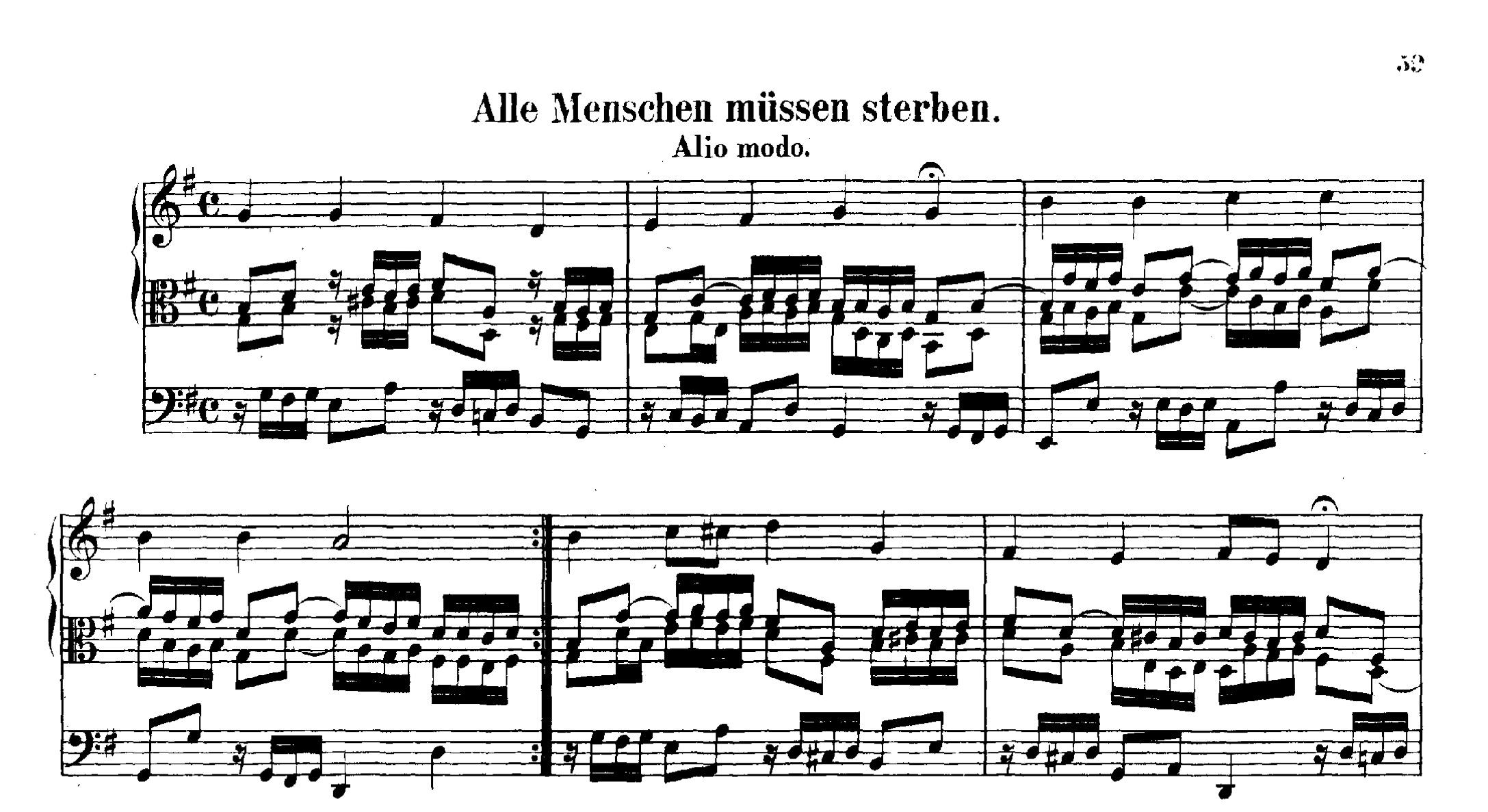
Here, the basic musical strictures might be summarized:
a) the chorale appears as quarter notes in the upper manual
b) the second manual and pedals consist almost entirely of a single motive, divided rhythmically into two segments: three off-the-beat 16ths (x) presented in a lower neighbor-note figuration, followed by two leaping eighth-notes (y)
c) the alto and tenor move in tandem in sixths or thirds
d) the alto/tenor and the pedals alternate (interlock) x+y motives
e) cadences occasion a relaxation of the above strictures
also:
x almost always moves to y by downward leap
x may occasionally follow another x
y may move to a subsequent x after a tie
Maintaining the principles above, here is a hypothetical setting of a different chorale, Mach’s mit mir, Gott, nach deiner Güt.
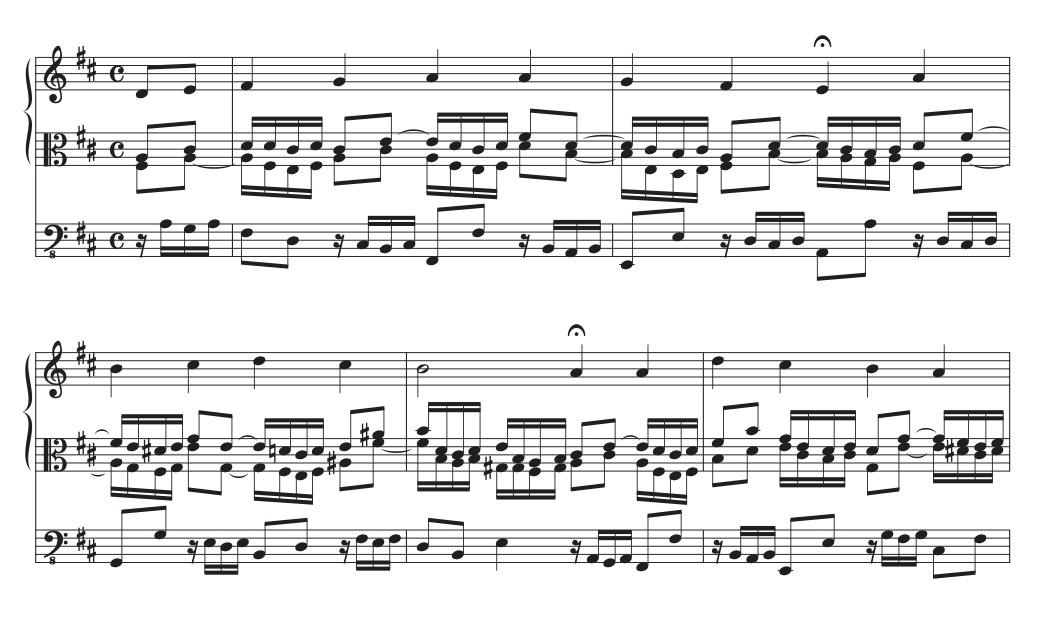
Using this method, it’s possible to “re-construct” a setting using musical material and principles extracted from a single phrase, as is given in the incipit forO Traurigkeit, o Herzeleid.
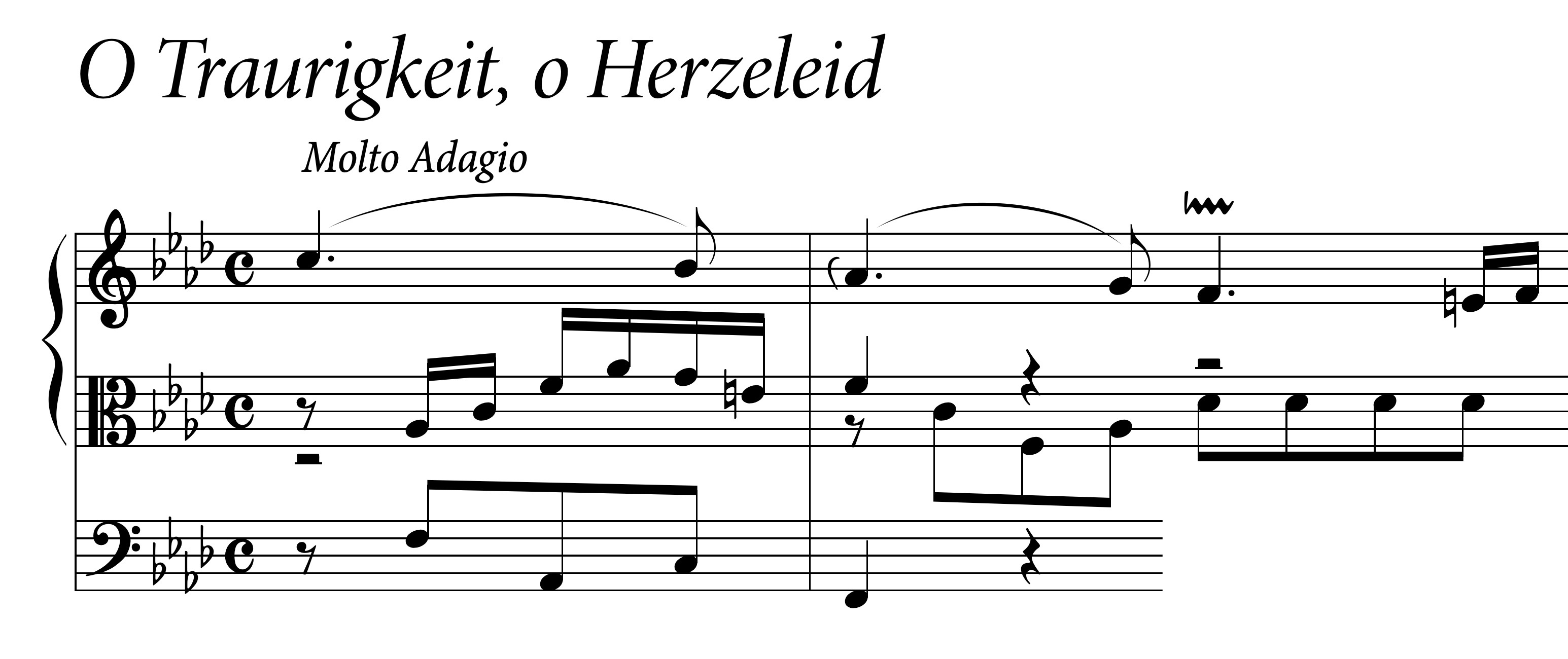
4. The incipit for O Traurigkeit, o Herzeleid seems to suggest a hybrid of 2b) and 2c) types (above).
The chorale melody is embellished: several written ornaments confirm this, as does Bach’s indicated slow tempo “Molto adagio.” There are only three other preludes that specify tempo: all of them are slow; all of them ornament the chorale melody; and two of the three are settings of “lament” texts for the Easter Season. (And, in fact, two also feature the exclamative “O” in their titles!)
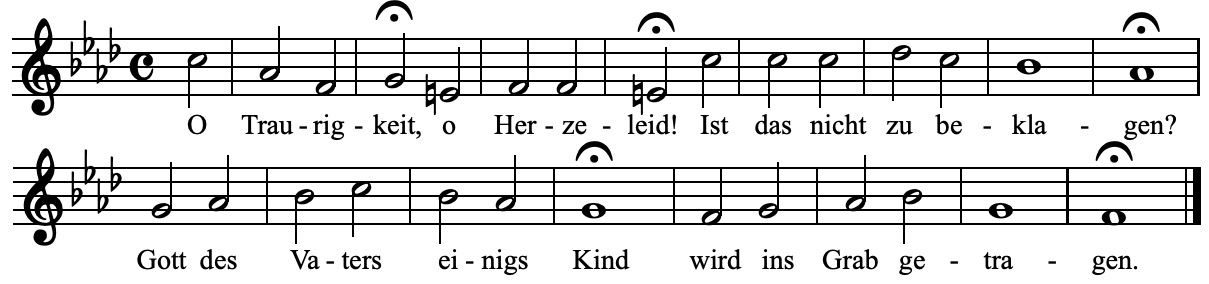
The motives presented in Bach’s incipit are derived from the chorale tune, in particular from the descending f-minor triad of its first three notes. The sixteenth-note motive in the alto and the eighth-note motive in the tenor/pedal are also both chordal and, in combination with the chorale tune, present an f-minor triad in three different rotations and at three different speeds. The repeated notes of the tenor voice are derived from the chorale’s second phrase.
5. Two characteristics of O Traurigkeit, o Herzeleid make its completion particularly challenging.
a) The leaping quality of the motives makes accommodating the harmonic changes difficult (stepwise motion is more flexible with regard to dissonance treatment) and;
b) the many long and repeated notes of the chorale tune pose constraints on embellishment
A Far Cry performs The Strangers’ Case
- On May 13, 2026
- By alzand@rice.edu
- In EVENTS, News, Performances, Reviews/Press
 0
0
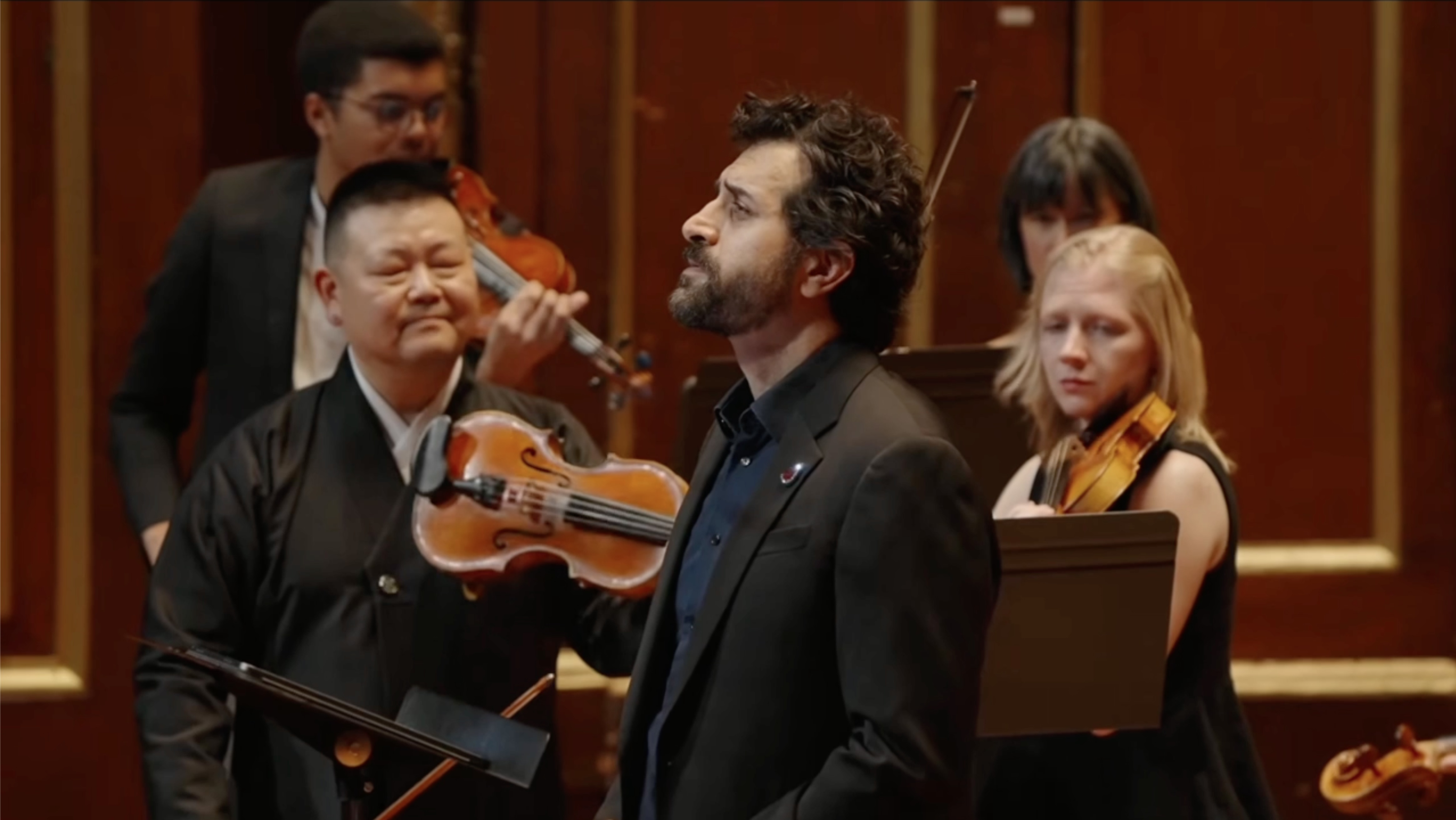
On May 9th Boston’s A Far Cry ensemble presented the East Coast premiere of The Strangers’ Case with Karim Sulayman, tenor. Review in The Boston Musical Intelligencer.
The Strangers’ Case presents songs and chronicles of the immigrant experience. It gathers together poems and narratives from diverse sources about the perennial journey of the “stranger.” The work’s title originates in Shakespeare’s monologue for Sir Thomas More, which eloquently argues for empathy and compassion towards displaced people. The Strangers’ Case reminds us of our shared history, though it is fraught with contradiction, filled with both selfless generosity and selfish indifference. Digital Program Book
The Strangers’ Case Premiere
- On April 02, 2026
- By alzand@rice.edu
- In EVENTS, News, Performances
- 0
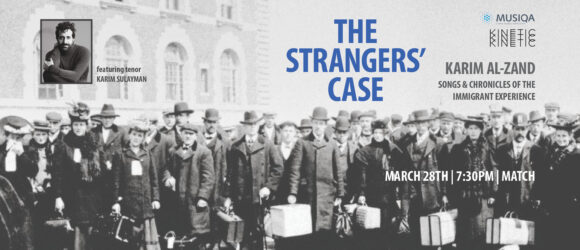
Kinetic Ensemble, Musiqa and tenor Karim Sulayman premiered The Strangers’ Case on March 28th. The work was subsequently recorded and filmed for later release.
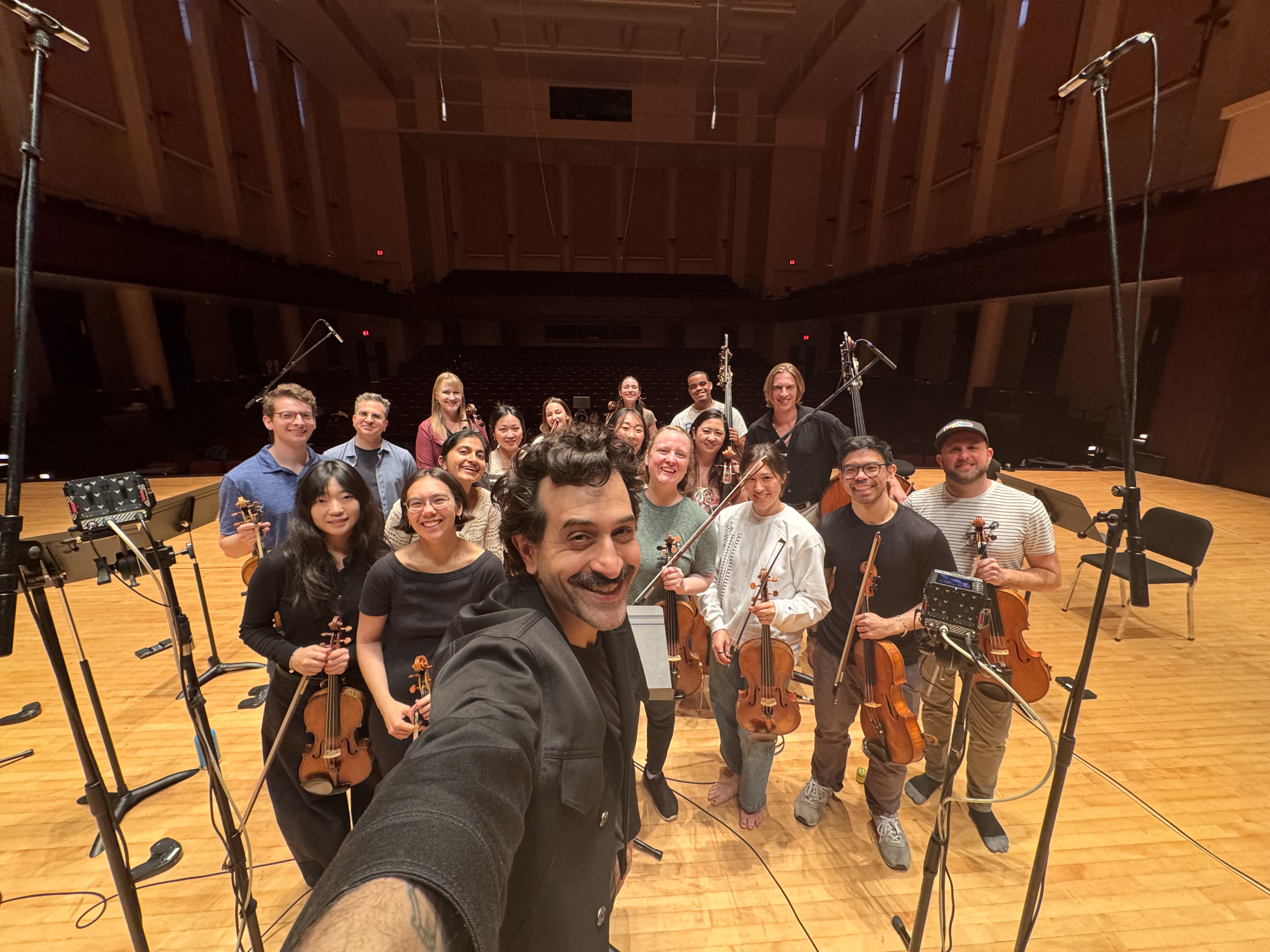
The Strangers’ Case (for tenor and string orchestra) presents songs and chronicles of the immigrant experience. It gathers together poems and narratives from diverse sources about the perennial journey of the “stranger.” The work’s title originates in Shakespeare’s monologue for Sir Thomas More, which eloquently argues for empathy and compassion towards displaced people. The Strangers’ Case reminds us of our shared history, though it is fraught with contradiction, filled with both selfless generosity and selfish indifference.
The Lady in the Harbor uses texts from a unique book, “Life Stories of Undistinguished Americans as Told by Themselves,” a collection of personal, turn-of-the-century accounts by immigrants to the US. It begins with the words of a young Polish girl describing her grueling Atlantic voyage, and concludes with a Syrian refugee’s poetic description of the New York harbor (“Such an Illumination”). Who Can Pity My Loneliness? excerpts a poem written in the wake of the 1882 Asian Exclusion Act. This is one of several anonymous Chinese poems found inscribed on the wooden walls of a San Francisco Bay immigrant detention facility. Whither Would You Go? uses Shakespeare’s monologue for More, in which the Catholic martyr addresses anti-immigrant rioters in 16th century London. The Stranger Within My Gate is a setting of passages from virulently xenophobic poems by Rudyard Kipling (“The Stranger”) and Thomas Bailey Aldrich (“Unguarded Gates”). They Came from Terror and Tumult translates a work by Mexican poet Jaime Torres Bodet (“Éxodo”) 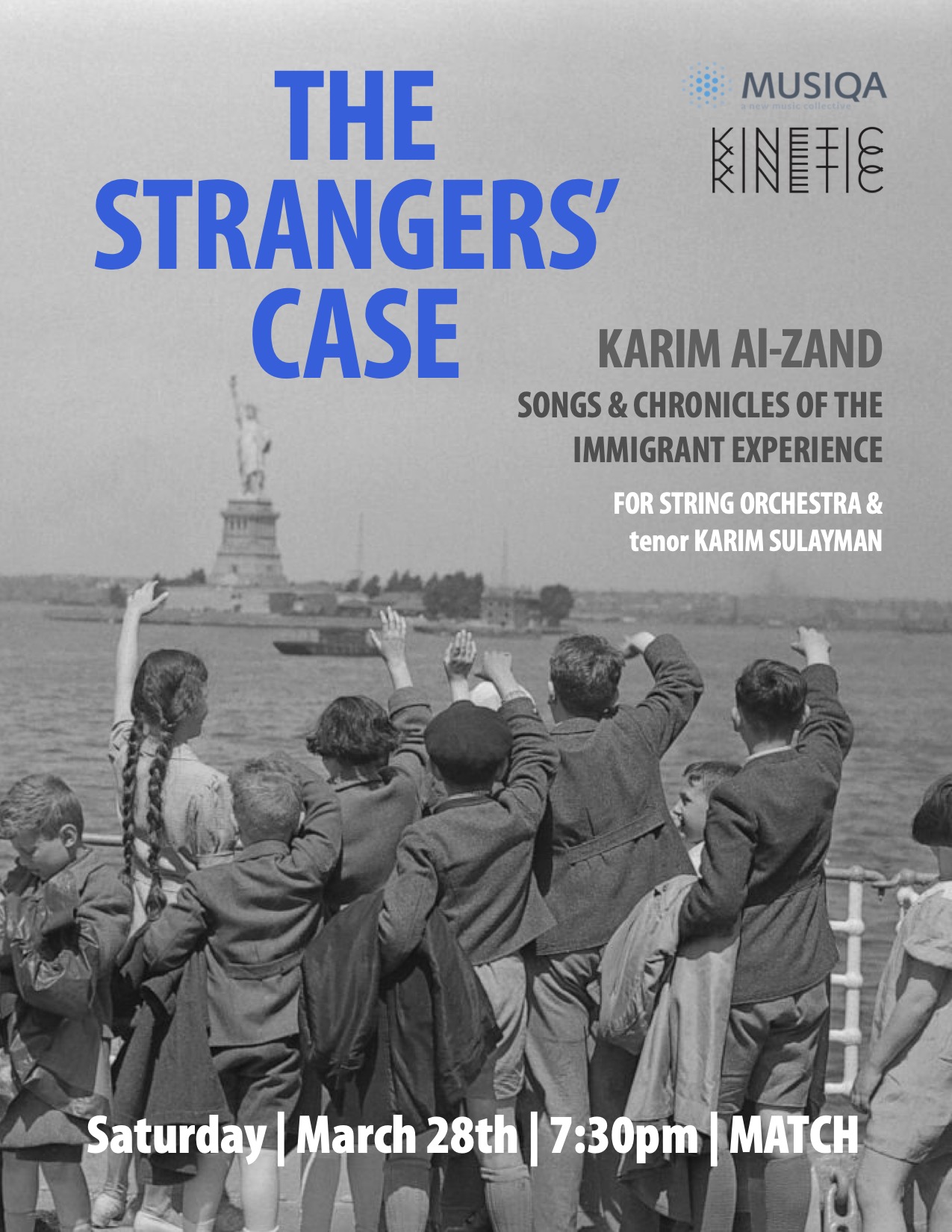 that describes a train of migrants escaping their war-torn homeland. Exile is a melancholic poem by Hart Crane about lovers who are separated by distance. When Dawn Comes to the City is by Claude McKay, a poet of the Harlem Renaissance who immigrated to the US from Jamaica in 1914. The poem contrasts a disaffection for grey, city life with a homesick nostalgia for the Caribbean. A remarkable and prescient 1908 poem by Arthur Upson, The Statue of Liberty (New York Harbor, A.D. 2900), imagines the New York harbor of the far future: the Statue of Liberty is unearthed, sunken in the mire, discovered by a “tyrant who misrules our land.” The piece concludes with Emily Dickinson’s powerful four-line verse, These Strangers, an admonition to friendship and kindness.
It is a truism that the United States is a country founded and strengthened by immigrants. However, current events remind us that this fact slips all too easily from our consciousness. Historically, as now, we have sometimes failed to lift our lamp of welcome. Despite being a foundational part of the American story, newcomers to this country have frequently faced profound mistreatment, exploitation and structural injustice. Nonetheless, the uniquely American immigrant story continues to be an inspirational beacon to the world.
By using texts that span diverse nationalities, stories, voices and historical periods, The Strangers’ Case aims to make a case of its own: though our commitment to immigrants and refugees has been equivocal, nonetheless their success forms the basis of American strength and renewal. As the child of an immigrant, I believe this sort of consciousness-raising is the only way forward. And as an artist, I believe that music is an ideal spark to kindle the altruism in our better natures.
The Strangers’ Case with A Far Cry featured on WBUR listings
- On March 20, 2026
- By alzand@rice.edu
- In EVENTS, News, Performances
- 0
 A Far Cry‘s upcoming May 9th concert with Karim Sulayman, including the premiere of The Strangers’ Case, is featured in the WBUR’s A Guide to Greater Boston’s Spring Classical Music Concerts.
A Joint Interest concert film
- On March 16, 2026
- By alzand@rice.edu
- In News, Performances
- 0
A Joint Interest
a comic chamber opera by Karim Al-Zand
libretto by Karim Al-Zand after a short story by O. Henry
commissioned for the 50th Anniversary of the Shepherd School of Music, Rice University, with assistance from the Rice Office of Research
conducted by Miguel Harth-Bedoya
directed by Paul Curran
cast:
Jessica Lyublinsky —Woman
Jack Burrows —Burglar
Garrett Reider —Officer
orchestra:
Isabelle Jamois: flute/piccolo
Luis Rangel: clarinet
David Green: cornet
Alec Eads: trombone
Tyler Martin & Will Vasquez: percussion
Nicholas Garcia-Hettinger violin
Ines Doulet: violin
Margaret O’Malley: viola
Sam Sykes: cello
Eli Hilborn: contrabass
A Joint Interest premiere for Shepherd School’s 50th Anniversary
- On January 26, 2026
- By alzand@rice.edu
- In EVENTS, News, Performances
- 0
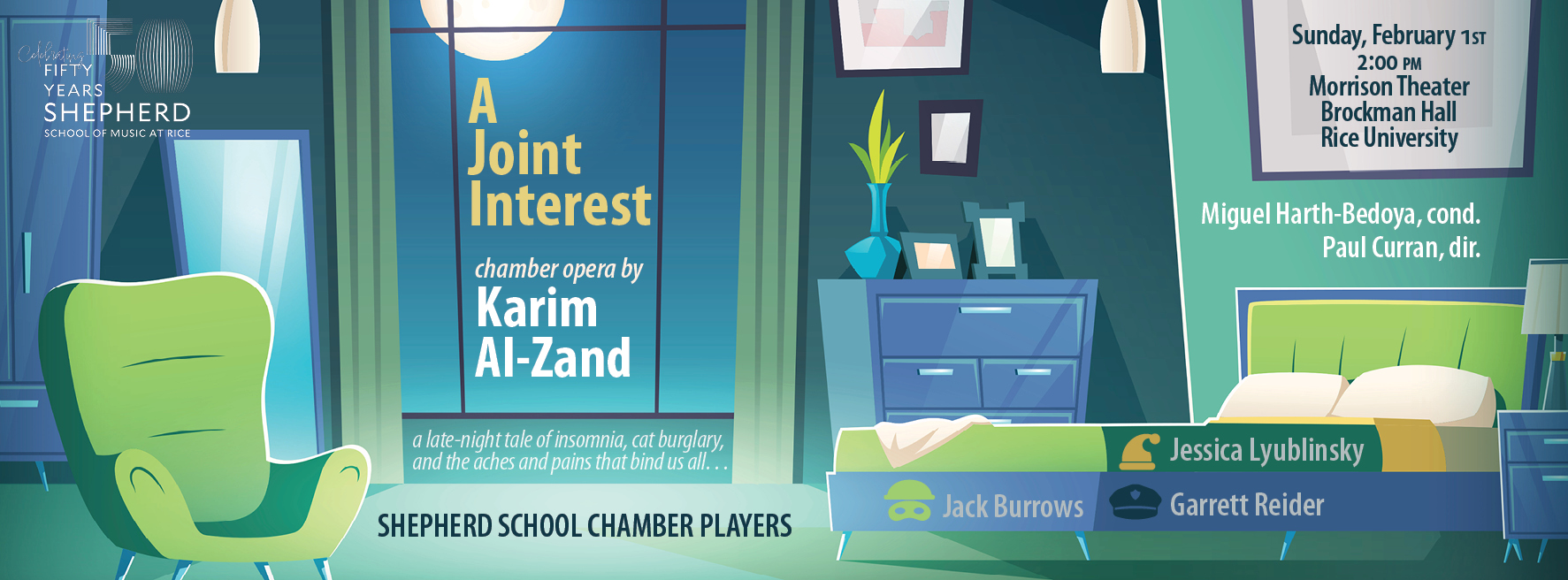 The chamber opera A Joint Interest was commissioned by the Shepherd School of Music (with funding assistance from Rice University Office of Research) on the celebratory occasion of the school’s 50th anniversary. Its premiere performance on Sunday, February 1st, 2pm will take place in the Morrison Theater of Brockman Hall at Rice University.
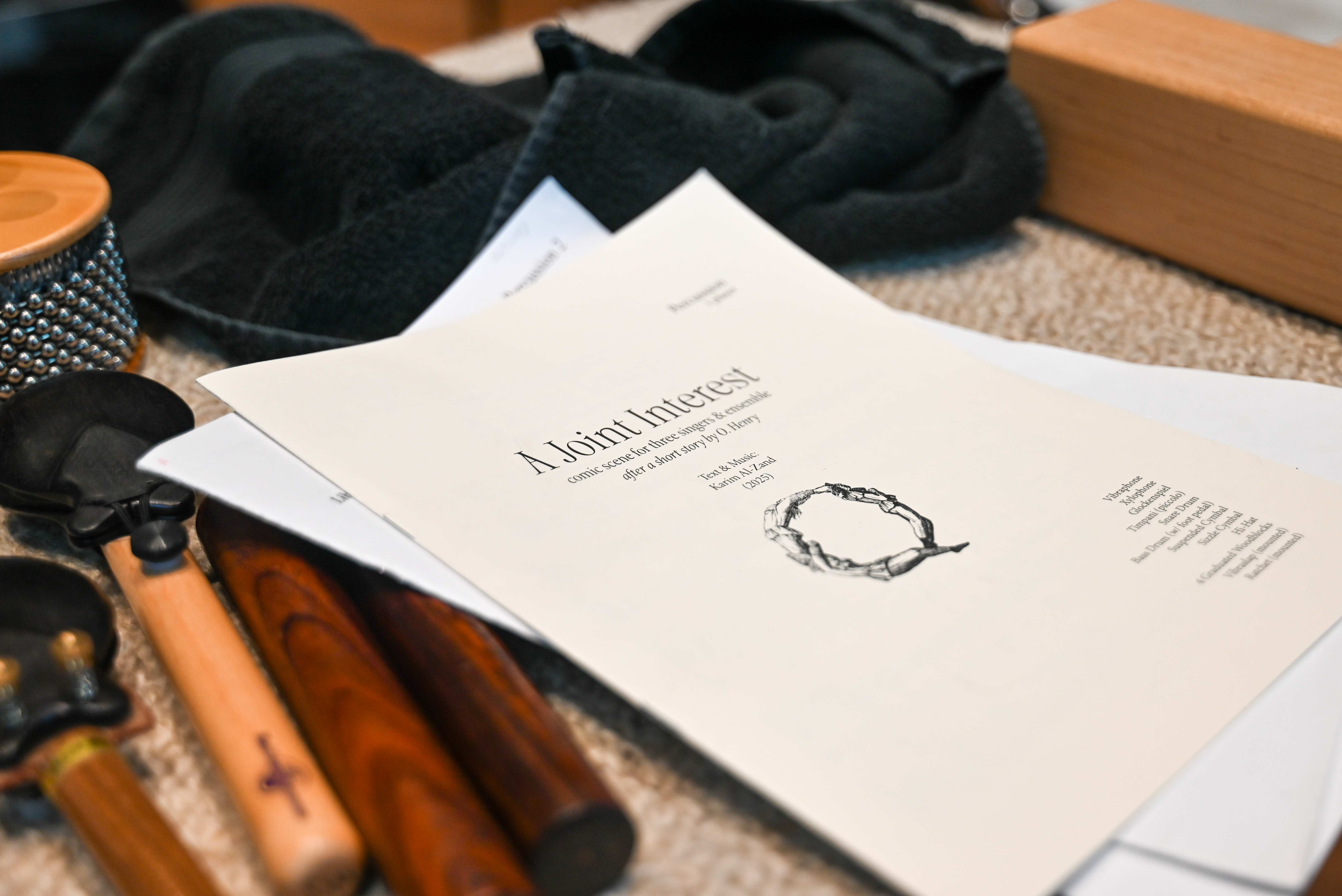
Photo: Lauren Ross
National Youth Orchestra of Great Britain performs City Scenes
- On January 06, 2026
- By alzand@rice.edu
- In EVENTS, News, Performances, Reviews/Press
- 0
The National Youth Orchestra of Great Britain, under conductor Alexandre Bloch, kicked off their Shimmer tour—a program which includes City Scenes—with a performance at the Barbican Center on January 5th. Concerts in Warwick Centre (January 6) and Nottingham Royal Concert Hall (January 7th) will follow. Reviewers from The Guardian, Times and Telegraph tripped over themselves to compare the music to dead composers they have ready notions about (America + Orchestra + Jazz = Bernstein!). UPDATE more reviews: reviewsgate.com and A Young(ish) Perspective. PLUS three, more reviews.
“The Bernstein-brash, neon blare of Karim Al-Zand’s 2006 City Scenes introduced new swagger, a cheeky little phrase hopping around the orchestra like a sonic Artful Dodger, and strings and harps a gleaming foil to streetwise brass and woodwind.”
The Guardian
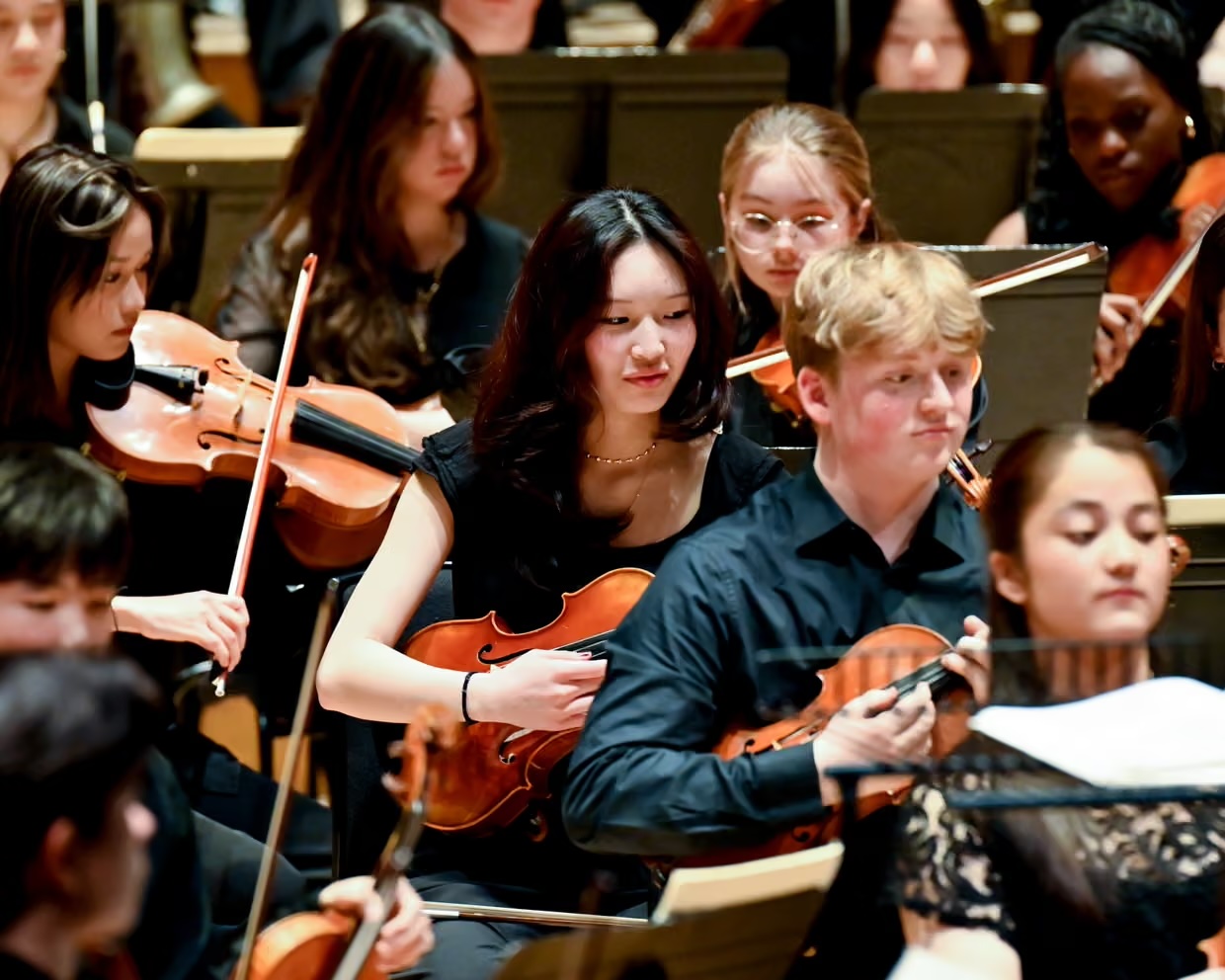
photo by Chris Christodoulou
“…urban, Bernstein-ish sound of City Scenes, by Tunisian-born American composer Karim Al-Zand was a breeze, and the delicately “wrong-note” solos from a handful of violins in the dreamy slow movement had a deliciously louche quality.”
The Telegraph
…with plenty of chewy textures for the players — and some nifty solo work slickly delivered by the orchestra’s leader Aki Blendis — and driven rhythms that have a hint of Shostakovich, but a Shostakovich who has been airlifted from Moscow and taken to Miami for a weekend.
The Times of London
City Scenes performed by National Youth Orchestra of the UK
- On December 27, 2025
- By alzand@rice.edu
- In EVENTS, News, Performances
- 0
The National Youth Orchestra of Great Britain, under conductor Alexandre Bloch, will perform City Scenes as part of their Shimmer program, in three New Year London concerts: Barbican Centre (January 5), Warwick Centre (January 6) and Nottingham Royal Concert Hall (January 7th).
Jonathan Mak: Pattern Preludes, book 1
- On December 02, 2025
- By alzand@rice.edu
- In Performances
- 0
A new film and recording by Canadian pianist Jonathan Mak of my Pattern Preludes, book 1, recorded at the Isabel Bader Centre for the Performing Arts in Toronto.
New Film of The Prisoner featuring Christopher Bozeka
- On June 18, 2025
- By alzand@rice.edu
- In News, Performances
- 0
From an April 2025 Musiqa presentation of The Prisoner, in a new chamber transcription featuring tenor Christopher Bozeka, and conducted by Emily Senturia. Film by Full Media Jacket
Houston Symphony Releases Film of Al Jazari’s Ingenious Clocks
- On June 10, 2025
- By alzand@rice.edu
- In News, Performances
- 0
The Houston Symphony Orchestra has released the March 15, 2025 livestream premiere of Al Jazari’s Ingenious Clocks, led by music director Juraj Valčuha.
