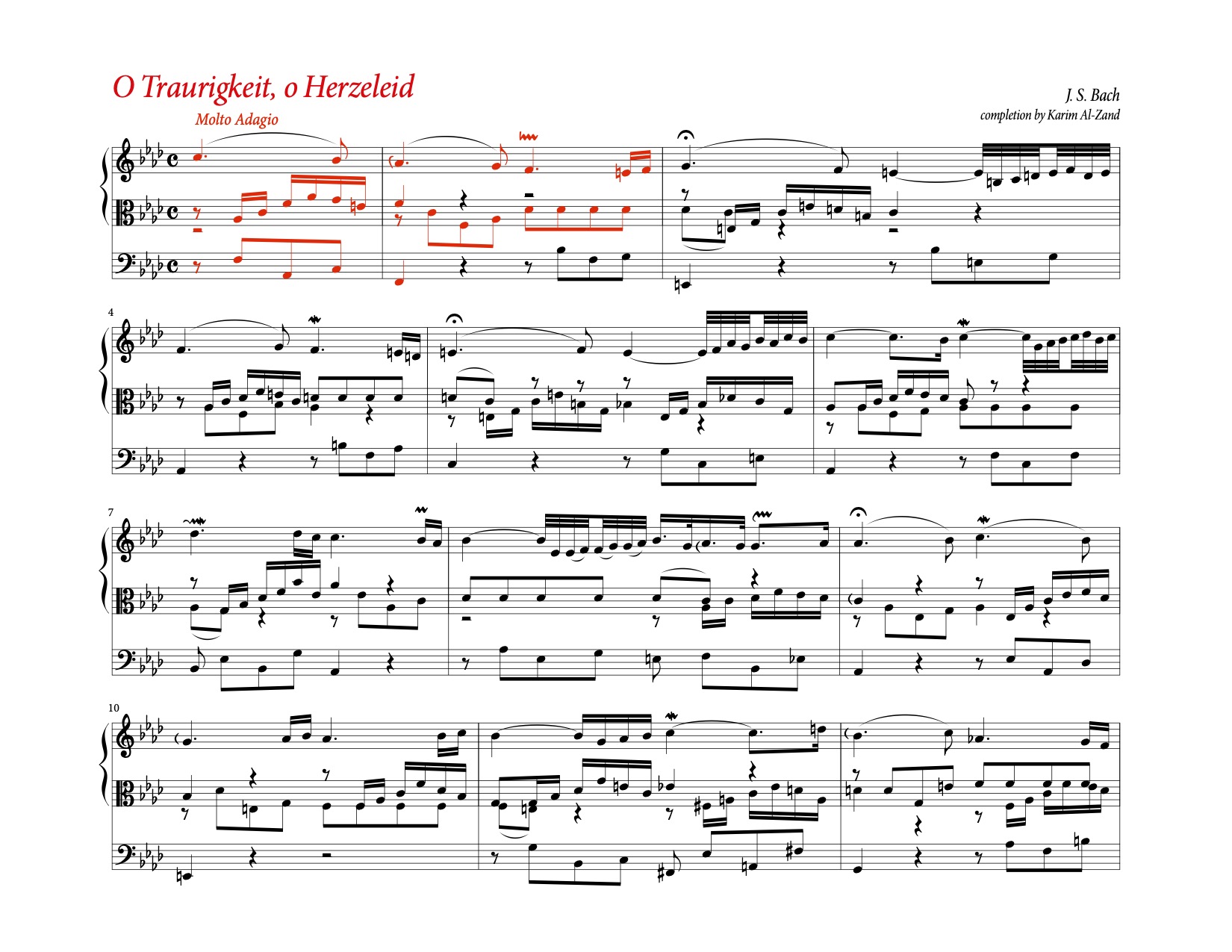
Completion of Bach’s O Traurigkeit, o Herzeleid

J.S. Bach’s Orgelbüchlein [Little Organ Book] is a compendium of organ chorale preludes organized by liturgical calendar. The 46 pieces in the collection were written largely during Bach’s time as the organist at the Ducal court in Weimar (1708-1717). One unique aspect of the manuscript is that Bach labelled all the pages of the book with chorale titles in advance, before writing the preludes themselves. As evidenced by the many blank pages, Bach seems to have envisioned a set of 164 preludes, filling out the entirety of the book, but in the end only a third of that number were written.
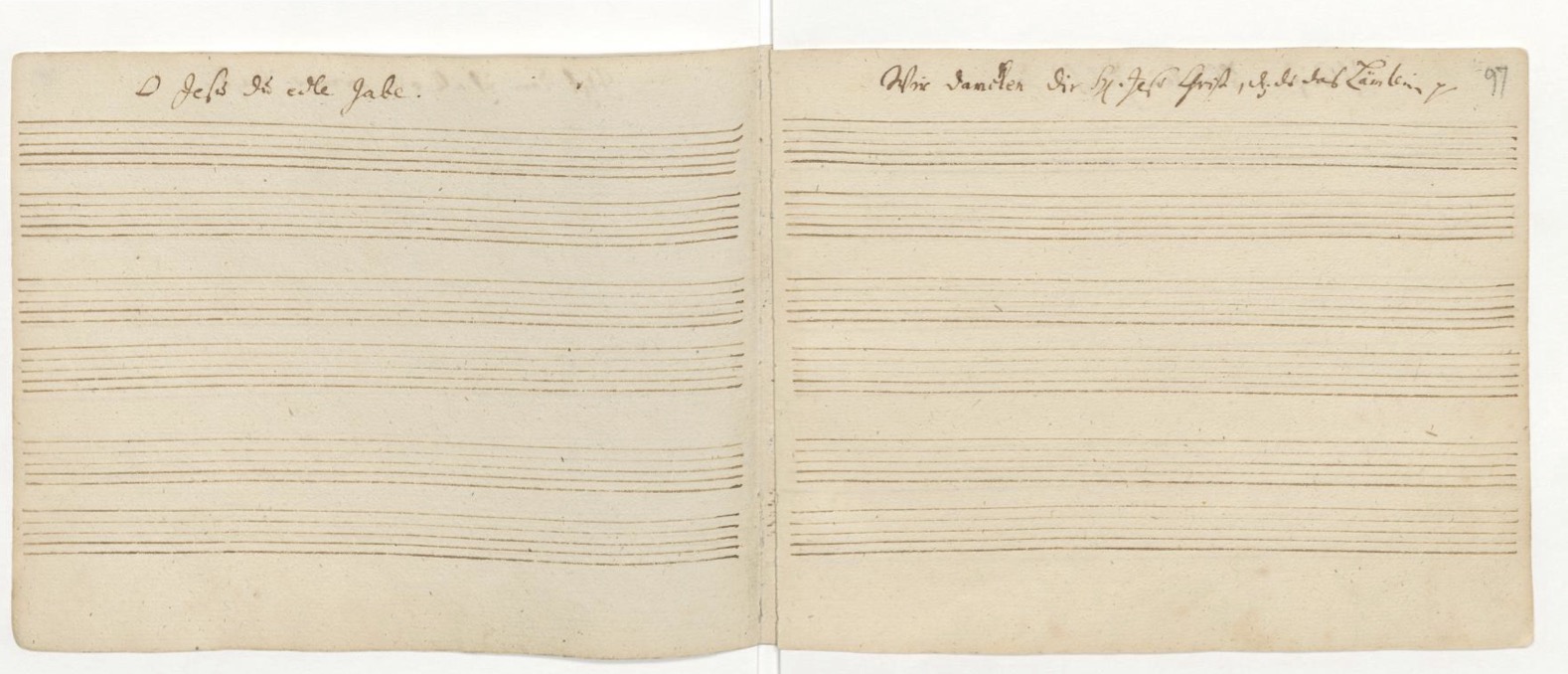
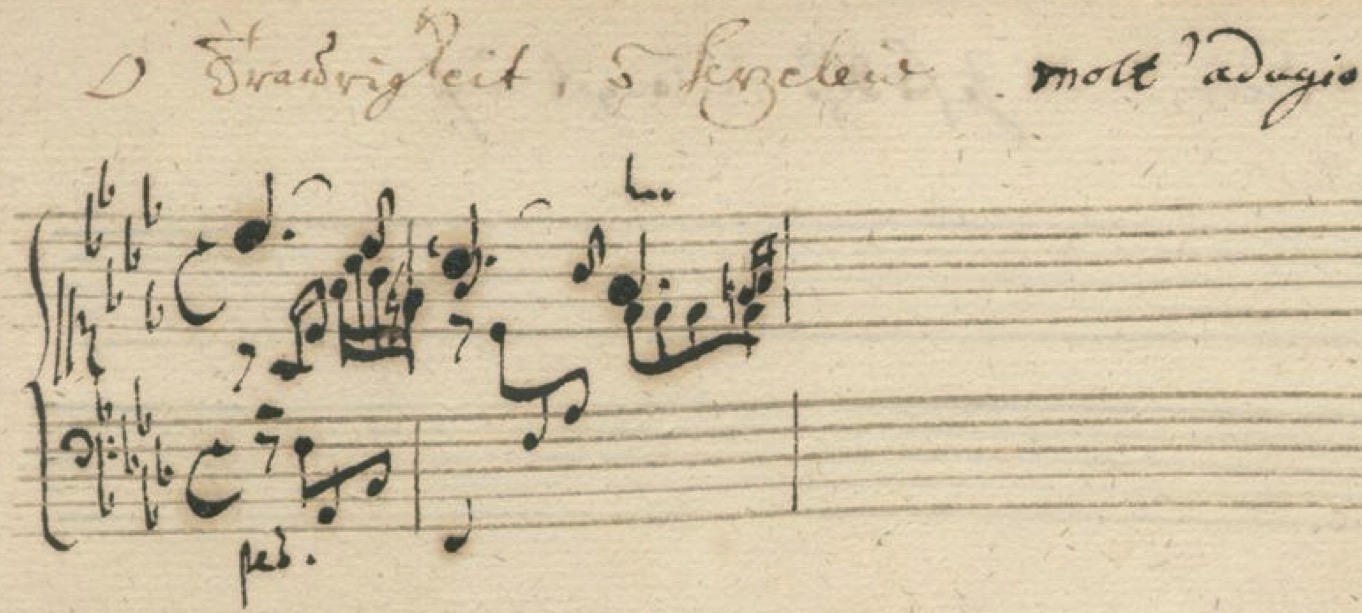
On one page however, corresponding to the passion chorale O Traurigkeit, o Herzeleid, Bach included a tantalizing one-and-a-half measure incipit:
The completion attempted here uses this incipit, in combination with Bach’s other extant preludes as models. The setting is predicated on several principles that seem to be operative in the Orgelbüchlein:
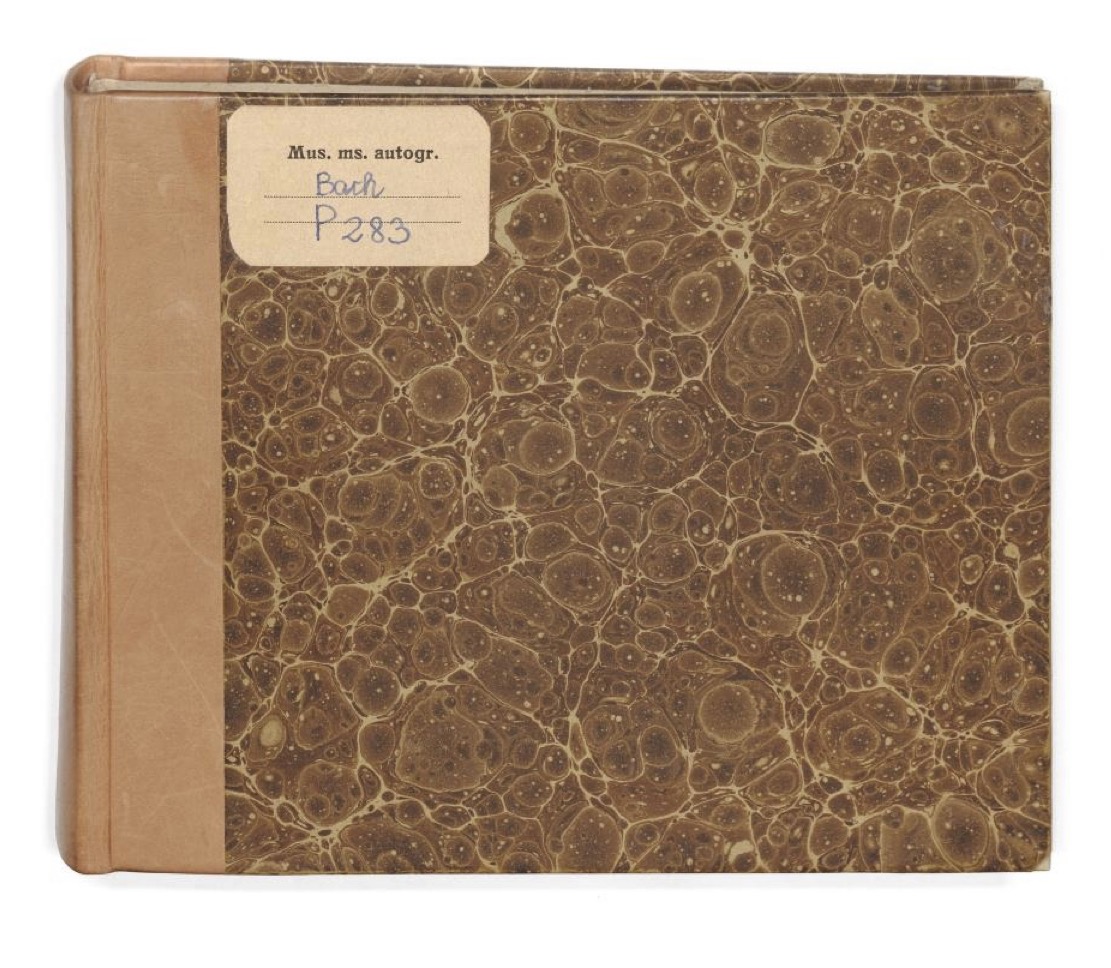
1. Each prelude is modest in scope, length and material. Bach seems to have been particularly concerned to keep each setting to a singe page, despite the fact that his manuscript book is exceedingly small (ca. 8”x7”). He goes to great lengths to accomplish this: writing notes names for the pedal part to avoid an extra staff; resorting to a compact tablature notation; or using “paste-ins” and facing pages to insert extra measures. (Besides the pragmatic performance considerations, the single-page limit may stem from Bach not wanting to intrude on subsequent pages, since they were already “reserved” for other preludes.)
2. Most of chorale preludes of the Orgelbüchlein fall fairly distinctly into three basic types:
a) preludes using contrapuntal artifice (canons of various sorts) in which the chorale tune is heard quite plainly;
b) preludes in which the chorale melody is floridly embellished, typically at a slow tempo; and
c) “pattern” preludes, such as described in 3. below, in which a consistent rhythmic-motivic texture is maintained from beginning to end, again with the chorale appearing fairly plainly in one voice.
3. The preludes use extreme economy in their motivic material. In most cases, each piece uses one or two distinct musical ideas, either derived from the chorale melody or inspired by its textual meaning. And each of those ideas is used in a consistent, well-defined textural/metric/rhythmic pattern or design. Thus, in many cases, the basic “blueprint” of a prelude is revealed within its first few phrases. This is most clearly exemplified in the chorale Alle Menschen müssen sterben.
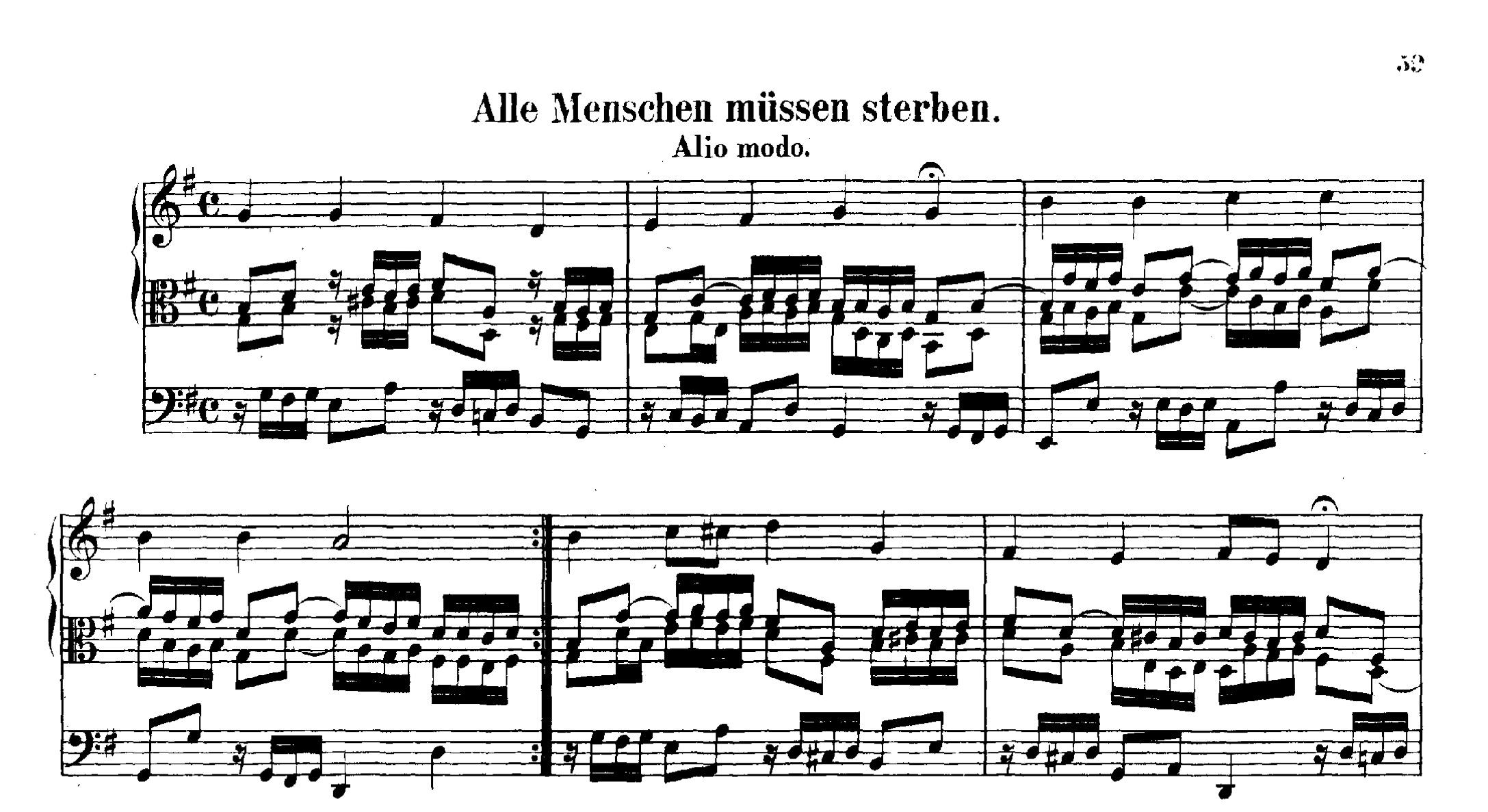
Here, the basic musical strictures might be summarized:
a) the chorale appears as quarter notes in the upper manual
b) the second manual and pedals consist almost entirely of a single motive, divided rhythmically into two segments: three off-the-beat 16ths (x) presented in a lower neighbor-note figuration, followed by two leaping eighth-notes (y)
c) the alto and tenor move in tandem in sixths or thirds
d) the alto/tenor and the pedals alternate (interlock) x+y motives
e) cadences occasion a relaxation of the above strictures
also:
x almost always moves to y by downward leap
x may occasionally follow another x
y may move to a subsequent x after a tie
Maintaining the principles above, here is a hypothetical setting of a different chorale, Mach’s mit mir, Gott, nach deiner Güt.
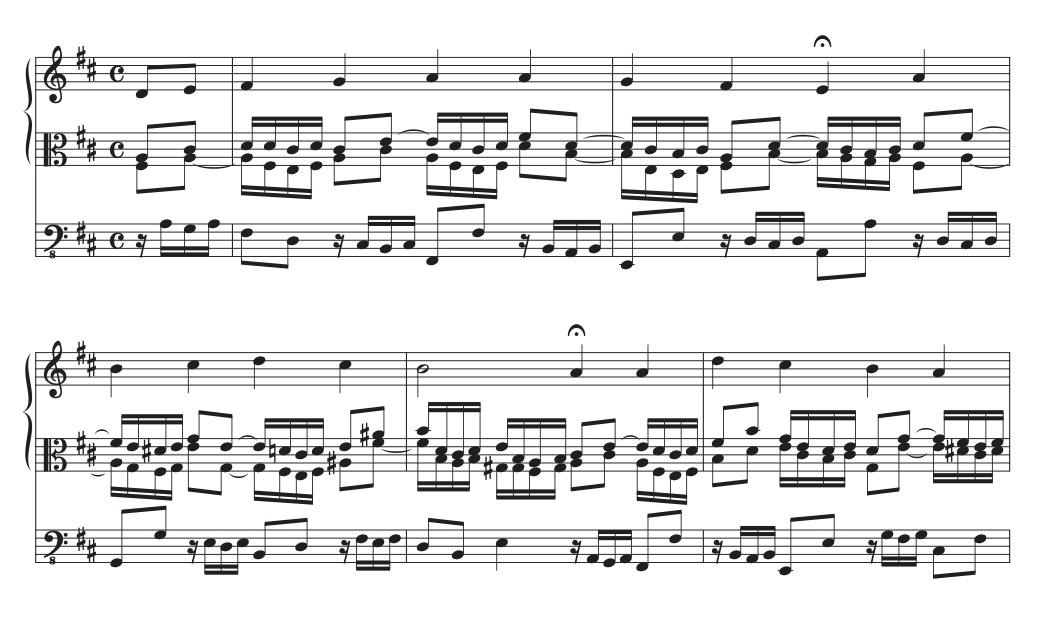
Using this method, it’s possible to “re-construct” a setting using musical material and principles extracted from a single phrase, as is given in the incipit forO Traurigkeit, o Herzeleid.
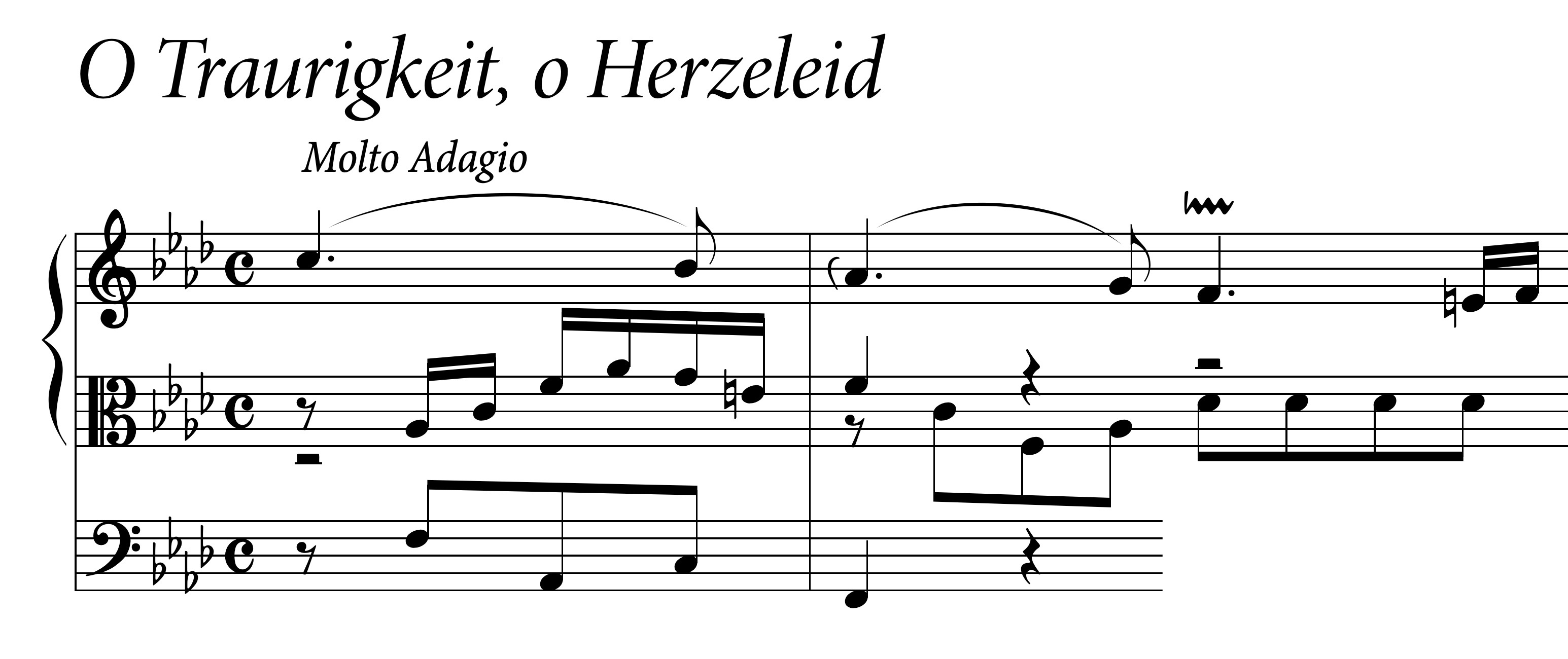
4. The incipit for O Traurigkeit, o Herzeleid seems to suggest a hybrid of 2b) and 2c) types (above).
The chorale melody is embellished: several written ornaments confirm this, as does Bach’s indicated slow tempo “Molto adagio.” There are only three other preludes that specify tempo: all of them are slow; all of them ornament the chorale melody; and two of the three are settings of “lament” texts for the Easter Season. (And, in fact, two also feature the exclamative “O” in their titles!)
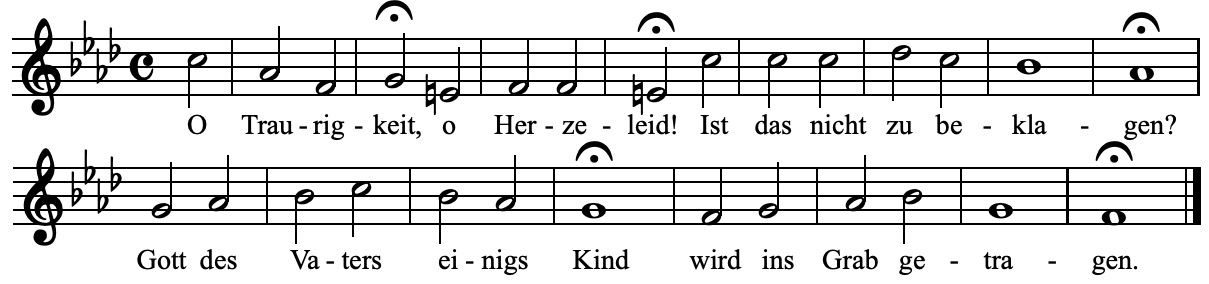
The motives presented in Bach’s incipit are derived from the chorale tune, in particular from the descending f-minor triad of its first three notes. The sixteenth-note motive in the alto and the eighth-note motive in the tenor/pedal are also both chordal and, in combination with the chorale tune, present an f-minor triad in three different rotations and at three different speeds. The repeated notes of the tenor voice are derived from the chorale’s second phrase.
5. Two characteristics of O Traurigkeit, o Herzeleid make its completion particularly challenging.
a) The leaping quality of the motives makes accommodating the harmonic changes difficult (stepwise motion is more flexible with regard to dissonance treatment) and;
b) the many long and repeated notes of the chorale tune pose constraints on embellishment