

A Preview of The Prisoner
- On August 15, 2017
- By alzand@rice.edu
- In News, Reviews/Press
 0
0

The premiere performance of The Prisoner at the Cabrillo Festival of Contemporary Music was previewed in the Santa Cruz Sentinel and in the short video introduction above, which explains the inspiration for the work.
Musiqa 2017–2018 season announced
- On July 26, 2017
- By alzand@rice.edu
- In Musiqa, News
- 0
Houston’s premier new music presenting organization Musiqa recently announced its exciting 2017–2018 season.
Bodies in Motion
September 23 | 7:30 pm
The Hobby Center for the Performing Arts Zilkha Hall,
Musiqa and Open Dance Project present a compelling evening of world premieres featuring KINETIC, the conductorless orchestra. Highlights of the program include two new pieces choreographed by Open Dance Project Artistic Director Annie Arnoult to riveting works for string orchestra by Musiqa composers Pierre Jalbert and Marcus Maroney. Plus guest artist Jane Weiner, founder and artistic director of Hope Stone Dance, choreographs Lonely Suite (Ballet for Lonely Violinist). Rounding out the program are Arnoult’s celebrated piece Stalemate with music by Andrew Bird, and Silent Moon, a duo for violin and cello, by composer Augusta Read Thomas.
Musical and Literary Ofrenda
November 2 | 5:30 pm
Lawndale Art Center
Musiqa celebrates the Mexican “Day of the Dead” with our annual five-way collaboration Musical and Literary Ofrenda at Lawndale Art Center. This free event is a collaboration with River Oaks Chamber Orchestra, Lawndale Arts Center, Inprint, and the Houston Hispanic Forum — all promoted by The Mexican Consulate. The five original musical “ofrendas” (offerings) — commissioned by ROCO from Musiqa composers — are woven amongst four original prose texts by Inprint authors, surrounded by the beautiful retablos (alterpieces) on display at Lawndale.
Looking Back in Time
January 13, 2018 | 7:30 pm
MATCH Box 4 / Midtown Arts and Theater Center Houston
Travel back time and to other worlds in this program featuring works by Musiqa composers for chamber orchestra. Journey to the dawn of man with Maternity, an oratorio by Musiqa Artistic Director Anthony Brandt with libretto by frequent collaborator David Eagleman; to the banks of the Sea of Galilee in Pierre Jalbert’s Transcendental Windows inspired by Tiffany stained glass; and the fanciful, otherworldly, Visions from Another World by Karim Al-Zand. The concert features a reading by Dr. Eagleman, bestselling author of “Sum” and “Incognito: The Secret Lives of the Brain.” Loop38 performs, with conductor Jerry Hou and soprano Karol Bennett.
The Moving Image
March 3, 2018 | 7:30 pm
MATCH Box 4 / Midtown Arts and Theater Center Houston
Experience modern cinema and music like never before. The program features cutting-edge films with live music including Anna Clyne’s Steelworks, a sonic tour de force that is edgy, individual and compelling inspired by visual artist Luke DuBois’ reimagining of the 1936 industrial film Steel: A Symphony of Industry. The evening also features Michael Gandolfi’s serene and jazzy meditation the history of the world in seven acts, a multimedia collaboration featuring the dancing animations of Jonathan Bachrach, plus short films with scores by Reena Esmail and Grawemeyer award-winning composer Michel van der Aa.
Playing Havoc
April 13, 2018 | 7:30 pm
MATCH Box 2 / Midtown Arts and Theater Center Houston
Musiqa presents Playing Havoc featuring Voices from the Killing Jar by Pulitzer Prize finalist, composer/performer Kate Soper. Part monodrama, part song-cycle, part opera, Voices from the Killing Jar crosses a volatile musical landscape populated by a series of female protagonists, among them housewives, teenagers, and mothers and daughters; innocents and tragic heroines; and femmes fatales. From Madame Bovary’s passionate whirlwind of delusion, to Lady Macduff’s terrified lullaby, to Clytemnestra’s hypnotic and deadly rage, each one is brought to vivid and unforgettable life as Soper’s mercurial voice traces a path through their stories.
Cabrillo premiere of The Prisoner approaches
- On July 26, 2017
- By alzand@rice.edu
- In News, Reviews/Press
- 0
 As its premiere performance on August 12th at the Cabrillo Festival of Contemporary Music approaches, The Prisoner and festival director Cristian Măcelaru have been previewed in the San Francisco Classical Voice, The Mercury News, Good Times, and The Santa Cruz Sentinel. Tickets (and program notes) are available on the Cabrillo Festival website.
The Prisoner to premiere at Cabrillo Festival
- On June 15, 2017
- By alzand@rice.edu
- In News, Reviews/Press
- 0
Cristian Măcelaru, conductor and newly appointed director of the Cabrillo Festival of Contemporary Music, will present the world premiere of The Prisoner, a new work for bass voice and orchestra. The piece was commissioned by Măcelaru and the Cabrillo Festival and will feature renowned bass-baritone Jonathan Lemalu. The premiere performance of this 30-minute work will conclude the two week festival on August 12th, 2017.
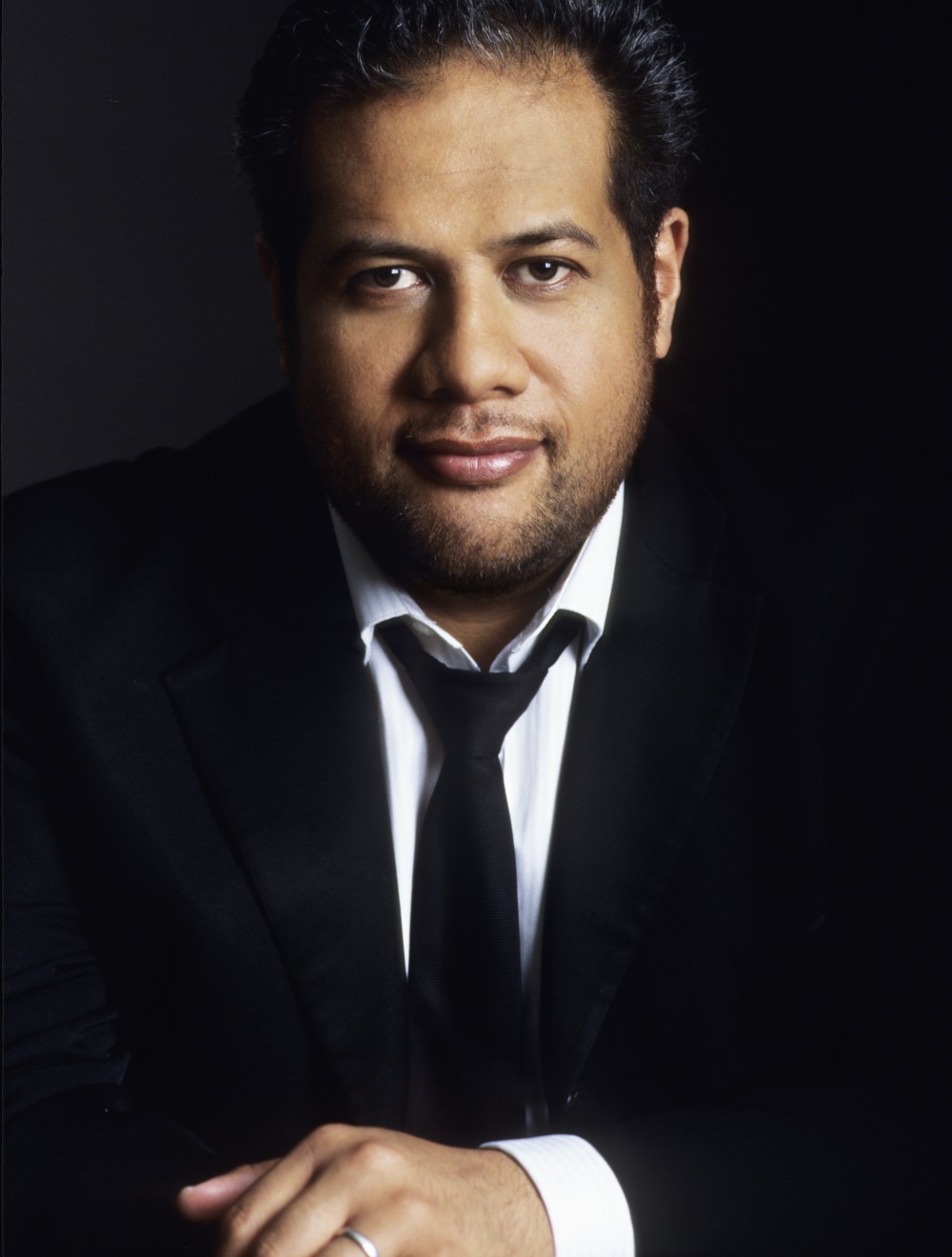
Jonathan Lemalu, bass
The Prisoner tells the story of Adnan Latif, one of the first men imprisoned in the US Guantánamo Bay Detention Camp in 2002. Its text is drawn from Latif’s own letters, sent to his lawyer while in captivity, and from other literary sources, including poems of Rilke, Al-Ma‘arri, Rūmī and the Book of Psalms. Latif was unjustly imprisoned. Never charged with a crime, he was held at Guantánamo for more than ten years and endured daily torture and near constant abuse. Although cleared for release by several courts and military tribunals, he remained in custody until his death under mysterious circumstances in 2012. Latif’s affecting letters were collected by human rights lawyer David Remes, and his poetry is contained in the 2007 anthology Poems from Guantánamo. The Prisoner alternates the words of Latif, set to music in a dramatic narrative style, with songs reflecting on his tragic plight.
Adnan Latif’s Story
In late 2001 Adnan Latif travelled to Pakistan from his home in Yemen seeking affordable medical treatment.The 26-year-old had been experiencing neurological problems brought on by head injuries suffered in a car accident. In December Latif was caught up in a dragnet of young Arab men along the Pakistan/Afghanistan border, undertaken by bounty hunters in the aftermath of 9/11. In exchange for a reward, he was handed over to us authorities in 2002 and transferred to the newly opened Guantánamo Bay Detention Camp.
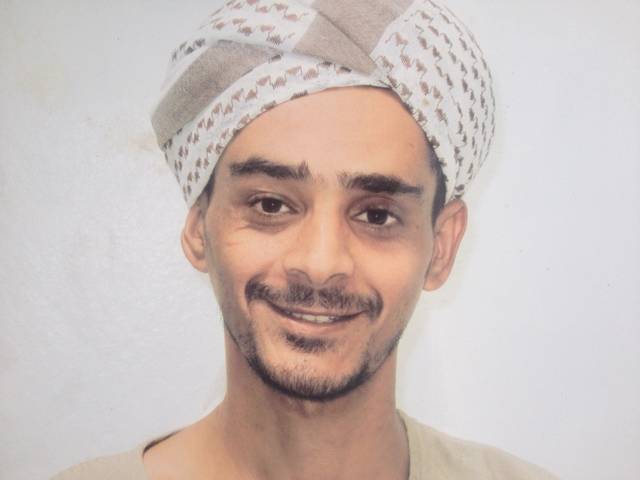
Adnan Latif (1974–2012)
While there, Latif was subjected to repeated and prolonged torture, beatings, psychological abuse and extreme deprivation. With other prisoners he participated in an extended hunger strike, during which inmates were painfully force-fed, and he attempted suicide on numerous occasions. Latif was held for almost 11 years without charge. According to documents, military tribunals had concluded multiple times that he posed no threat, and that there was no evidence to justify his continuing incarceration. He was cleared for release by officials as early as 2004 and again in 2007. A further court ruling in 2010 ordered the administration to “take all necessary and appropriate diplomatic steps to facilitate Latif’s release.” On each occasion his release was denied, first by the Bush administration and later, by the Obama administration. In September of 2012 Latif was found dead in his cell, the ninth prisoner to die at Guántanamo. An autopsy was performed but its results are classified. A year later his body was returned to Yemen, to his wife and now 14-year old son. Forty-one prisoners remain at Guantánamo today. President Trump has pledged to add to its prison population, Attorney General Jeff Sessions calling it “a very fine place.”
Luctus Profugis featured on Houston Public Media
- On January 18, 2017
- By alzand@rice.edu
- In News
- 0
 The second episode of Encore Houston presents KINETIC, the conductorless ensemble in their season-opening concert of 2016, “Illuminations.” a concert which began with the premiere of Luctus Profugis. Encore Houston, hosted by Joshua Zinn, airs Saturdays at 10 pm, with a repeat broadcast Sundays at 4 PM, all on Houston Public Media Classical.
