

Review of Paganimania in Fanfare
- On July 10, 2015
- By alzand@rice.edu
- In News, Reviews/Press
 0
0

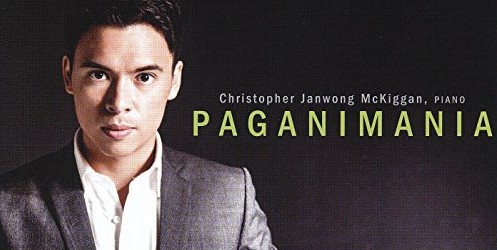
A new review of Christopher Janwong McKiggan‘s CD Paganimania appeared in the recent Fanfare online blog. The CD features the premiere recording of Paganini Reverie.
Article in Symphony Magazine
- On June 05, 2015
- By alzand@rice.edu
- In News, Reviews/Press
- 0
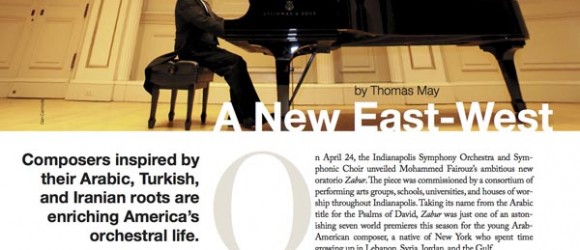
The Summer 2015 edition of SYMPHONY, the quarterly magazine published by the League of American Orchestras, features an article by Thomas May entitled A New East-West Polyphony, which highlights composers who are “drawing on their Arabic, Turkish, and Iranian roots to enrich America’s orchestral life.” The Houston Symphony’s performance of my City Scenes is mentioned, as is the work of Mohammed Fairouz, Fawzi Haimor, Mariam Adam, Mehmet Ali Sanlıkol, Kinan Azmeh, Kareem Roustom, Malek Jandali, and Reza Vali.
Paganini Reverie Film
- On June 03, 2015
- By alzand@rice.edu
- In News
- 0
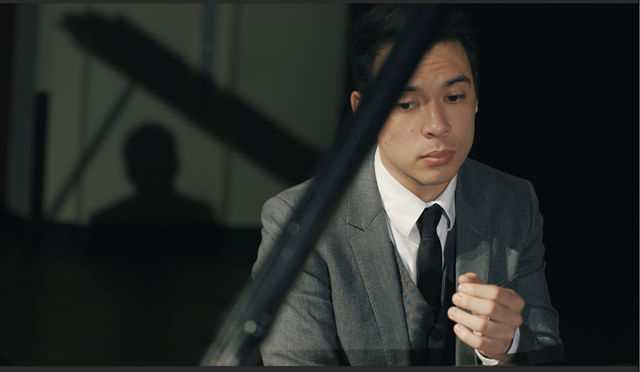
Richie Hawley of Little Frenchie Filmhouse has just released a new film featuring pianist Christopher Janwong McKiggan playing my Paganini Reverie. The film’s visual style is an homage to Alfred Hitchcock, specifically his 1959 film North by Northwest. Hawley is the former principal clarinetist of the Cincinnati Symphony and a current faculty colleague at the Shepherd School of Music. His films are always lively and kinetic, elegantly filmed, produced and—most significantly—eminently musical. Chris McKiggan is a virtuosic young pianist whose musical versatility and innovative programming of new works are hallmarks of his artistic style. His recording of Paganini Reverie can be found on his CD Paganimania.
Edmonton Symphony Orchestra plays Visions
- On May 15, 2015
- By alzand@rice.edu
- In News
- 0
 The Edmonton Symphony Orchestra has announced its 2015–2016 season, which will include an April 30th, 2016 performance of Visions from Another World, under the direction of Cristian Macelaru, Associate Conductor of the Philadelphia Orchestra. An announcement of the season appears in the Edmonton Journal. Also on the program is Brahms’s Symphony No. 3 and Elmer Bernstein’s Guitar Concerto.
An Interesting Measure in the Goldbergs
- On May 12, 2015
- By alzand@rice.edu
- In Musical Miscellanea
- 0
In Bach’s Goldberg Variations there’s a brief passage in variation 13 that presents some curious counterpoint. At the start of that variation’s second half (m. 17) there is what appears to be a parallel octave between the bass and the upper voice. It’s the result of an appoggiatura in the soprano—a decoration which is one of the characteristic melodic motives of the variation. Bach embellishes a repeated B (the last sixteenth of the second beat and the first sixteenth of the third beat) with an appoggiatura C. At this same moment, the bass also moves from B to C. 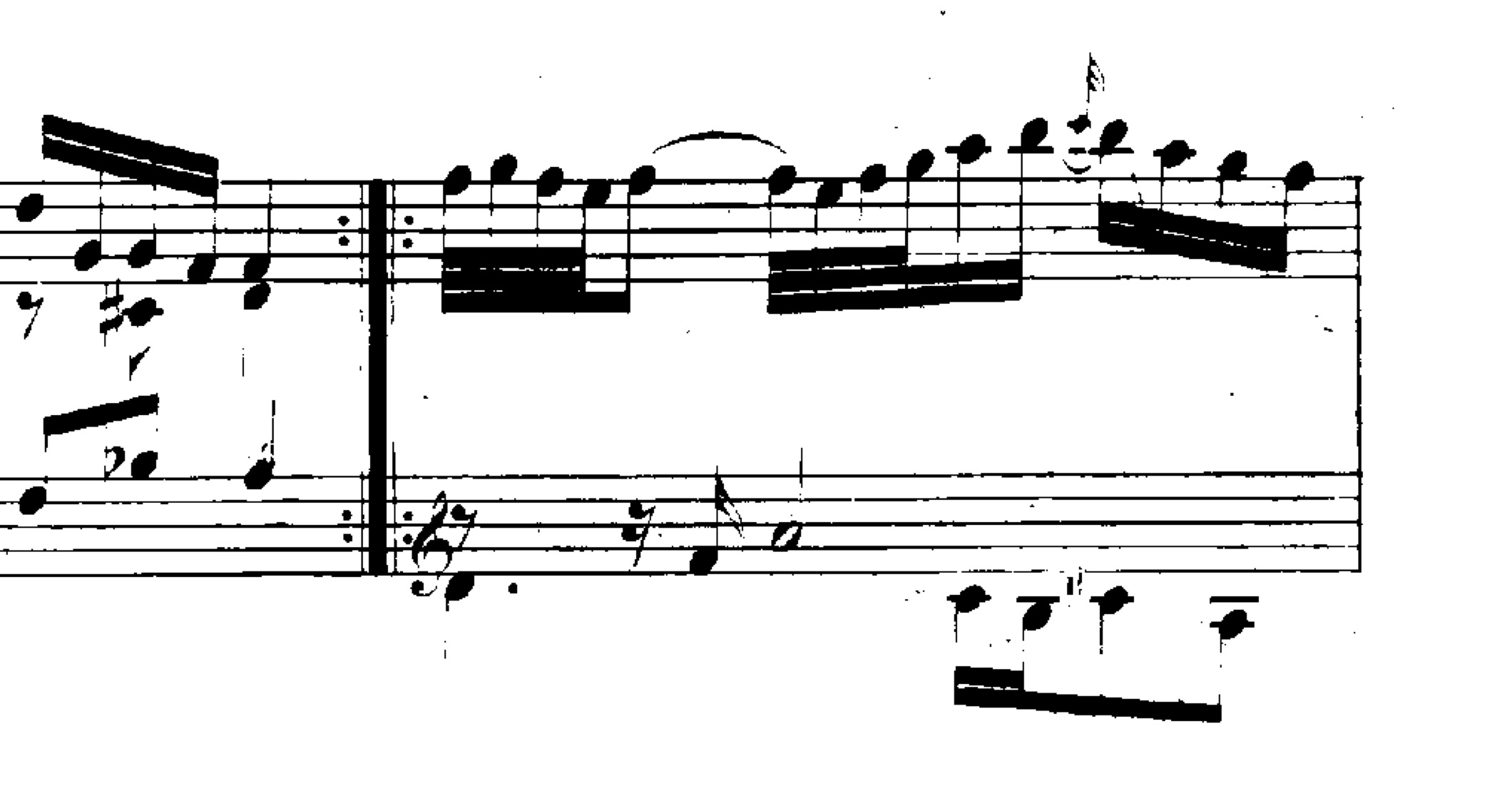 It doesn’t look like much on the page, but the parallelism is pretty striking and obvious in performance—nothing else is going on at that moment. I’m not sure if this measure makes it into Brahms’s Oktaven und Quinten catalogue, but it’s definitely a good candidate. It’s also an interesting example of a melodic practice Leopold Mozart rails against in Versuch einer gründlichen Violinschule. The B on the third beat is already a non-chord tone: it’s an accented upper neighbor, which resolves to the A that follows (a sixth over C in the bass). So Bach’s decorative melodic C is essentially embellishing an embellishment—decorating a non-chord-tone with a chord tone…!? Leopold Mozart tells us “this can surely never sound natural but only exaggerated and confused.”
But I think this interesting contrapuntal detail reveals even more. It makes an argument for performance practice here: that this appoggiatura (and presumably all the others in this variation) must correctly be played “short.” That is, rather than being coupled to the following B to form a thirty-second-note pair, the C should be played swiftly and clipped. These two possible realizations exemplify the distinction between the long appoggiatura, which “takes its value” from the note it precedes, and the short appoggiatura, which “has no value.” The former are played on the beat, the latter before the beat. Understanding and performing this appoggiatura as short, and thus occurring before the beat, means there is no parallel here after all!
In my limited survey of Goldberg recordings, performances of variation 13—as one might expect—usually break neatly into “period performance specialists” who play the appoggiatura short (Pinnock, Leonhardt, Staier), and pianists who play it long (Gould, Sokolov, Schiff). But not always: Perahia gets it right (perhaps not surprising, given his noted musical intellect) and so does Kempff, but Landowska doesn’t.
