

Balourdet Quartet performs Strange Machines at Chamber Music America Conference
- On March 01, 2025
- By alzand@rice.edu
- In Uncategorized
 0
0


Chamber Music America’s National Conference was held for the first time outside of New York City on February 13-16th in Houston, Texas. The Balourdet Quartet performed Strange Machines as part of the conference’s final concert on February 15th, a gala celebration of the Fischoff Chamber Music Competition. (Balourdet was awarded the gold medal in that competition in 2020). The commission of Strange Machines was made possible by a 2021 CMA Classical Music Commissioning Grant.
Other participants and awardees at the conference included Apollo Chamber Players and ROCO, who appeared with composer Wang Jie and me on a panel entitled “Activating Audiences through Commissioned Work,” hosted by Fred Child.

Kinetic Ensemble preview The Strangers’ Case
- On December 07, 2024
- By alzand@rice.edu
- In Uncategorized
- 1
 On November 22nd, Kinetic Ensemble, Houston’s conductorless chamber ensemble previewed The Strangers’ Case, an upcoming song cycle for voice and string orchestra. The work gathers together poems, personal accounts and other literary sources drawn from the American immigrant experience. Its title is borrowed from Shakespeare’s monologue for Sir Thomas More, which eloquently argues for empathy and compassion towards displaced people.
  The Strangers’ Case was funded in part by the City of Houston through Houston Arts Alliance. A feature on the program appeared in the Houston Chronicle.
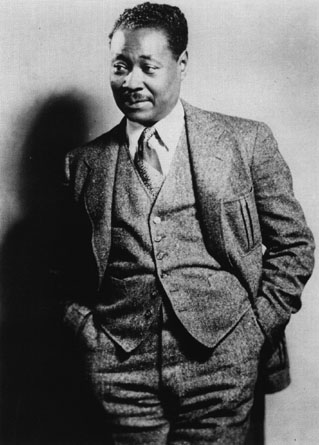
Kinetic’s program, curated by Tonya Burton (viola) and Austin Lewellen (bass), featured “When Dawn Comes to the City,” based on text by Harlem renaissance poet (and Jamaican immigrant) Claude McKay, sung by soprano Alexandra Smither. The song reflects a nostalgia and yearning for home that is a recurring theme in McKay’s work.
The tired cars go grumbling by,
The moaning, groaning cars,
And the old milk carts go rumbling by
Under the same dull stars.
Out of the tenements, cold as stone,
Dark figures start for work;
I watch them sadly shuffle on,
’Tis dawn, dawn in New York.But I would be on the island of the sea,
In the heart of the island of the sea,
Where the cocks are crowing, crowing, crowing,
And the hens are cackling in the rose-apple tree,
Where the old draft-horse is neighing, neighing, neighing,
Out on the brown dew-silvered lawn,
And the tethered cow is lowing, lowing, lowing,
And dear old Ned is braying, braying, braying,
And the shaggy Nannie goat is calling, calling, calling
From her little trampled corner of the long wide lea
That stretches to the waters of the hill-stream falling
Sheer upon the flat rocks joyously!
There, oh, there! on the island of the sea,
There I would be at dawn. —CLAUDE McKAY
The Strangers’ Case will be presented in its entirety in January 2026, as a co-presentation of Musiqa and Kinetic. Several of its texts are taken from a unique 1906 publication entitled Life Stories of Undistinguished Americans as Told By Themselves, a series of personal, turn-of-the-century accounts by immigrants to the United States: “Lady in the Harbor” is the story of a young Polish girl destined for the textile sweatshops, and “Such an Illumination” from a Syrian refugee fleeing persecution in his homeland. “Island of Angels” excerpts lines written in the wake of the 1882 Asian Exclusion Act. This anonymous poem, translated from the Chinese, was found inscribed on the wooden walls of a San Francisco Bay immigrant detention facility. The cycle will also include a remarkable and prescient 1908 poem by Arthur Upson, “The Statue of Liberty (New York Harbor, A.D. 2900)” that imagines the New York harbor of the far future: the Statue of Liberty is unearthed, sunken in the mire, discovered by a “tyrant who misrules our land.”
Moveable Do podcast interview
- On December 07, 2024
- By alzand@rice.edu
- In News, Reviews/Press
- 0
An interview from the most recent episode of Moveable Do podcast, hosted by Steve Danielson.

Al Hakawati concert film released
- On December 07, 2024
- By alzand@rice.edu
- In EVENTS, News
- 0
WDR Sinfonieorchester Köln has just released a concert film of the September 21st European premiere of Al Hakawati (The Story Teller), featuring Miriam Khalil, and conducted by music director Cristian Măcelaru. The work is a co-commission of the Cabrillo Festival of Contemporary Music, WDR Sinfonieorchester Köln and Orchestre National de France.
Al Hakawati presents fragments from an opera-in-progress entitled The Book of Tales. The opera is inspired by a recent discovery about a beloved story collection: the so-called “Arabian Nights.” The exact provenance of these medieval Arabic tales—properly known as Alf Laylah wa-Laylah (One Thousand and One Nights)—has always been something of a mystery. That all changed in 1993 when a forgotten 18th century Arabic manuscript was found in the Vatican library. It was a travel memoir written by a 75-year-old Syrian storyteller named Hanna Diyab. It recounts how, as a young man in 1707, the young Diyab had embarked on an extraordinary, years-long journey to Europe. His incredible adventures culminated in a meeting with the Sun King, King Louis XIV, in the halls of Versailles. Diyab told entrancing stories to everyone he met in his travels, including to Antoine Galland, a translator and archaeologist in Paris. It was Galland who, in 1710, first introduced Western readers to the stories of Ali Baba and Aladdin in Les Mille et une Nuits—though Galland makes no mention of Diyab. The storyteller returned to Aleppo in 1709 and eventually became a successful cloth merchant. He seems to have had no idea how far his captivating stories had travelled.
The opera connects stories and storytellers across time and place: from the present day, to the Ancien Régime of France, to the imaginary world of Scheherazade. The fragments in Al Hakawati comprise four “scenes” that feature the opera’s principal female characters.
1. I shiver, I tremble
The famed storyteller Scheherazade contemplates her precarious circumstances: each night she tells stories to the murderous Shahryar to postpone her execution.
I shiver, I tremble,
Trapped in a story of woe.
Frightening and violent.
Beyond these walls, this sky,
Another storyteller wanders free.
I would dance with her, my sister,
As the world shares her stories.
A different time, and place,
Another hakawati gathers friends.
I would sing with him, my brother,
As the world shares his stories.
Worlds interwoven with words and wishes.
Another Scheherazade, from afar.
I shiver, I tremble,
Trapped in a story of woe.
Frightened, but not silent.
2. He sleeps, this one
Shahryar is finally asleep. Consumed with fury, Scheherazade prepares to set his bed alight.
He sleeps, this one…
Sleeps the sleep of cruelest kings,
and of wickedness;
a callous and cold sleep, deep.
I seethe, inside…
Seethe with rage that terror brings,
and its bitterness;
with each breath left to breathe, seethe.
I can no longer weep.
The wound is too deep.
Sleep! In a burning keep!
Sleep! Sleep! The righteous flames will leap!
3. Dance of the seven swords (orchestra)
Murjana dances for her husband, Ali Baba, and a visiting merchant. She alone has discerned their guest’s true identity: he is Nadir, the leader of a band of thieves. He plans to kill her witless husband, who has foolishly stolen their treasure. At the climax of the dance she dispatches the villain.
4. For all I know
Tarina Safar, a modern-day scholar of medieval Arabic, has discovered Hanna Diyab’s manuscript in the Vatican library. She marvels at the power of stories and of storytellers.*
For all I know,
a story has wings, that it might soar—
fledged in a mind,
flying from our lips,
flocking to eager ears,
to open our dreaming eyes—
homing to our hearts.
Swirling stories—in droves they take a murmuring shape,
in forms that scrape the drawn dawn—
tracing a truth in the sky.
نبي الشعب
لعنة الملوك
حكواتي حكواتي
اشرح لنا حكمة الاشياء
For all I know,
a tale is a pilgrim, that it might journey—
migrating from world to world,
message in its satchel,
moving through ages,
arriving here—
to camp in our hearts.
Traveling tales—a caravan with load of amber,
flutes and tambour the dawn down—
leaving lessons in the sand.
Hakawati, teller of tales:
the people’s prophet,
the curse of kings.
Hakawati, Hakawati!
Show us the wisdom of things!
*Safar’s character is fictional, but she is inspired by the American scholar of Islam, Nabia Abbott (1897–1981), the first female professor at the University of Chicago’s Oriental Institute. Abbott did some of the earliest research into the origins of the Thousand and One Nights.
Cinderella presented at Miller Outdoor Theater
- On October 20, 2024
- By alzand@rice.edu
- In Musiqa, News
- 0
Musiqa had its debut at Houston’s iconic Miller Outdoor Theater, with a characteristic program of inter-arts works. The evening program included a presentation of Lotte Reiniger’s 1922 silent silhouette film, Cinderella, with live music, conducted by Yue Bao. 
